Showing posts with label Dysfunctional Systems. Show all posts

Monday, January 6, 2014

The Hypercritical Geek Video Game Awards: Day 1

Well, well, well. It would appear another year has passed us by and it’s time to dish out some awards. Last year I began my more unorthodox award ceremony with three days of reflection upon my yearly gaming experiences. I had the more traditional accolades such as Best RPG, Best PS3 Exclusive, and Game of the Year; but I also gave out some more unique ones such as Best Non-2013 Game and Best Collector’s Edition. There were even a handful of anti-awards. All in all, I dished out 27 of the most sought after titles and this year I’ve increased the madness to 42 awards over four days.


In case you’re interested, you can peruse last year’s winners and nominees below.


Without further ado, I present the first day of the Hypercritical Geek/General Mills44 Video Game Awards!


Best Sony Exclusive- The Last of Us, Resogun, and Ni No Kuni: Wrath of the White Witch


Winner-The Last of Us! While a post-pandemic setting with zombie-esque creatures may not be overflowing with creativity, it’s the writing which sets The Last of Us apart from the competition. The characters, their scripts, and the performances given are some of the best seen this generation.


Best PC Exclusive- Outlast, Organ Trail: Director’s Cut, and Gone Home


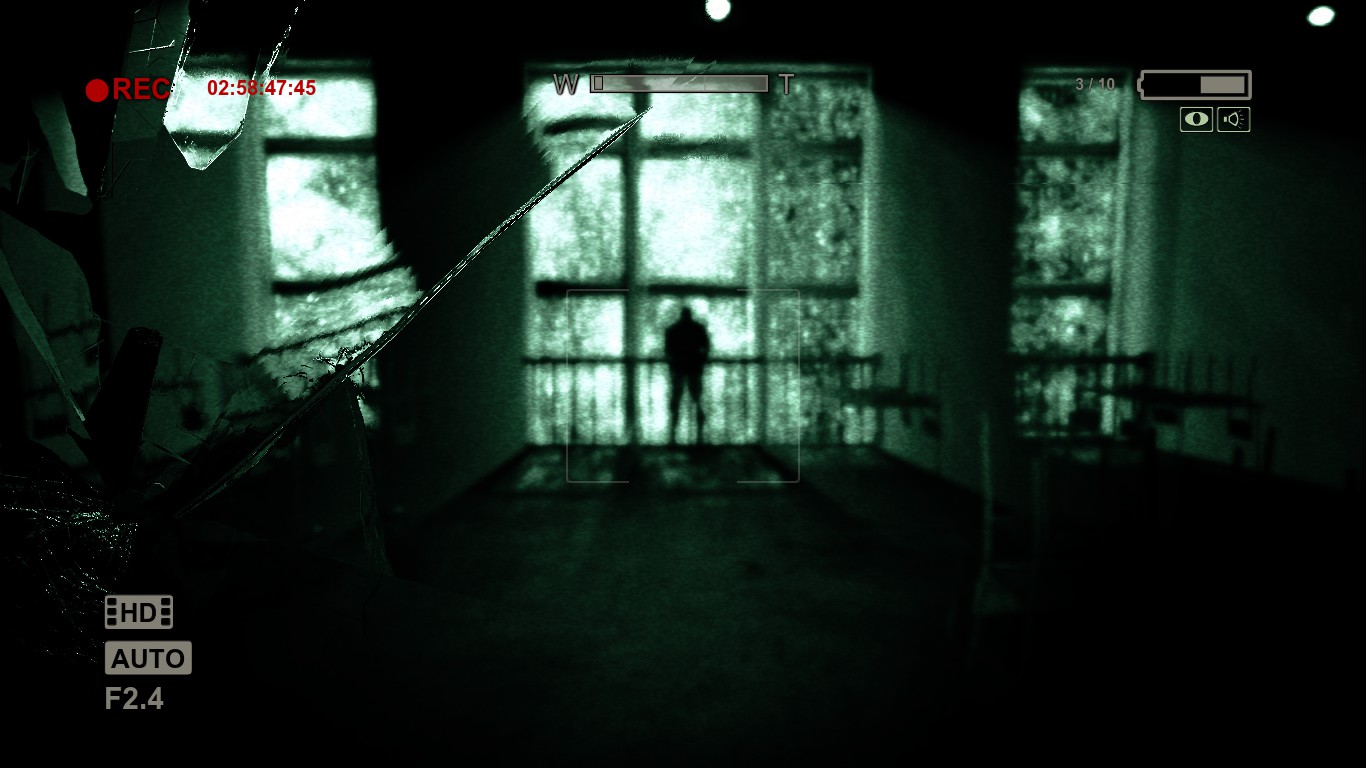
Winner- Outlast! Survival-horror is back and thanks to games like Outlast, and they won’t be going back into the dark recesses of the industry anytime soon. Every second I spent in Mount Massive, was incredibly tense and certainly contributed to more than a few years shaved off my life.


Best Nintendo Exclusive- Fire Emblem: Awakening, Shin Megami Tensei IV, and The Legend of Zelda: A Link Between Worlds


Winner- Fire Emblem: Awakening! The 3DS had one hell of a 2013 lineup but Fire Emblem: Awakening is the cream of the crop. As my first experience with a series I’ve longed desired to get my hands on, Awakening is just about everything I hoped for. Narratively typical, the over-idealistic JRPG hoopla is outweighed by the lovably diverse cast. Topped off with some great tactical combat, and there isn’t a whole lot of room for improvement.


Best Microsoft Exclusive- Due to the lackluster lineup of the 360, and me not owning an Xbox One, there actually is no winner this year. I originally had three nominees, but seeing as both State of Decay and Brothers: A Tale of Two Sons made their way to PC, I find myself physically incapable of awarding Gears of War: Judgment.


Best Shooter- Bioshock Infinite, Call of Juarez: Gunslinger, and Payday 2


Winner- Call of Juarez: Gunslinger! With a mixture of classic arcade and modern all in one, no game better exemplified what it means to be a shooter. The run and gun madness of the wild west is an ideal setting Gunslinger takes full advantage of.


Best Action- State of Decay, Monaco: What’s Yours is Mine!, and The Last of Us


Winner- The Last of Us! While receiving much of its praise for its story, The Last of Us is no slouch in the gameplay department. The weighty, brutal, and stealth oriented action is thematically apt and brings a welcome mixture of challenge to the AAA market.


Best RPG- Tales of Xillia, Ni No Kuni: Wrath of The White Witch, and Fire Emblem: Awakening


Winner- Fire Emblem: Awakening! At first glance Awakening is more strategy than RPG, but after sinking a few hours in there’s plenty of stats, classes, and other fixtures of the genre. The thing is, they’re done in a way that makes them far more seamless than most RPGs. The depth is there, oh man is it there, but it’s never overbearing. To me, that’s the perfect RPG.


Best Simulation/Strategy- Game Dev Tycoon, Organ Trail: Director’s Cut, and Fire Emblem: Awakening.


Winner- Fire Emblem Awakening! How does a game win awards for two different genres? Simple, by being better than any other game in either one. Not only does Awakening excel as an RPG, but it does so as a strategy game as well. Both genres are melded perfectly together into one challenging and complex -but accessible- experience.


Best Platformer- Rayman Legends, The Swapper, and Rouge Legacy


Winner- Rayman Legends! Colorful, zany, fast-paced, hilarious; these are all appropriate descriptions. Legends took what Origins did right back in 2011 and improved upon the formula with some welcomed additions such as the music levels and a greater variety of gameplay.


Best Multiplayer- Monaco: What’s Yours is Mine!, Payday 2, and The Last of Us


The Winner- The Last of Us! Honestly, at first I was less than impressed, but as I got to know the Survivors mode, I quickly became aware of how good it truly is. The methodical combat does fall victim to a frustrating lack of polish but teamwork-centric gameplay is refreshing in today’s landscape.


Best Indie- Outlast, Gone Home, and Monaco: What’s Yours is Mine!


Winner- Outlast! The indie scene seems to be an ever-growing home for survival-horror and while Outlast borrows concepts Amnesia: The Dark Descent made popular, I never felt I wasn’t experiencing something terrifyingly new.


Best Downloadable-  Outlast, Gone Home, and Brothers: A Tale of Two Sons


Winner- Outlast! Out of all three of these games, Outlast gives you the most bang for your buck. It’s always a pleasant surprise when a downloadable indie title takes you over eight hours to finish.


Best Episode of an Unfinished Episodic- Faith (The Wolf Among Us), Learning to Manage Chaos (Dysfunctional Systems), and All that Remains (The Walking Dead S2)


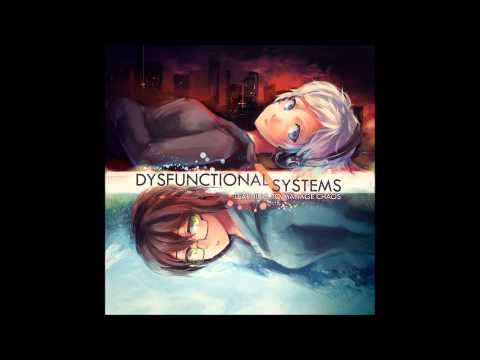
Winner- Dysfunctional Systems: Learning to Manage Chaos! Yeah, not even Telltale could top the work of Dischan Media. Dysfunctional Systems juggles a female protagonist, a complex sci-fi setting, and heavy moral quandaries. Usually one or two of those would sink an inexperienced dev but that’s not the case for this superb visual novel.

Tuesday, November 19, 2013

Functional Brilliance- Dysfunctional Systems: Learning to Manage Chaos Review

DS EP1 Review Cover.jpg
 Before I delve into the dirty bowels of this review, I would like to remind you of my recent Monday Mourning, and encourage you to keep it in mind as I discuss this truly exceptional piece of entertainment. I would also like to remind you this game's name makes writing a communicative title an almost IMPOSSIBLE feat. 
Despite previously releasing Juniper’s KnotDysfunctional Systems: Episode 1: Learning to Manage Chaos is the first truly interactive visual novel from the team at Dishcan Media. Set in an instantly enthralling Earth, steeped in futuristic utopia. Other worlds and planes of existence have been discovered and it is the duty of the "mediators" to keep the chaos of foreign systems in check. As Winter Harrison, players take control of the young mediator-in-training on her second mission to a world where a small and impoverished country suffers at the hands of its wealthy neighbor. A troubling matter for sure, but alongside her mentor Cyrus, it’s a supposedly routine operation.
WHAT COULD THAT POSSIBLE BE? WELL, WHY DON'T YOU PLAY THE BLOODY GAME FOR YOURSELF AND FIND OUT?
Merely possessing all the usual sci-fi workings isn’t enough to captivate an audience, a truth which Dishcan thankfully understands. While not a multiverse per se, the potential for a wide variety of settings is in place. Imagine any world you’ve read, seen, or heard about in fiction — that’s the potential we have here. Sci-fi should know no bounds. It should be one of the most creative vehicles for fiction, and all of my geeky desires were properly tantalized.
On the flipside, this isn’t Star Wars, or any other big name sci-fi universe which glosses over the depth of their characters. Thought-provoking concepts aren’t just toyed around with; they’re introduced with all the care of an explosives expert. Winter and the rest of the cast are bathed in a ocean of moral quandaries that will change them, for better or for worse.
It’s this sort of complex writing which makes Winter an incredibly sympathetic character. Having the fate of an entire country in your hands is bad enough at any age, but at fourteen it’s simply too much to comprehend. Still, it’s a "routine operation" by mediator standards, which only seems to worry Winter more. All possible routes of handling the situation, no matter how minor, have numerous permutations and potential consequences. One could easily feel overwhelmed. She does.
The only guidance she receives come from her moral compass, a meager amount of training, and the experience of a mentor she doesn’t fully trust. She's still a kid, which is made laughably obvious in relatable moments — such as her first beer. They’re subtle and seemingly inconsequential but at the same time serve to detail the inexperienced protagonist and the abrasive Cyrus. Of course, Winter’s somewhat naive and idealistic attitude directly clashes with her mentor, creating an awkward relationship between the two from the get go.  
DIALOGUE IS OCCASIONALLY STIFF, BUT OTHERWISE JUICY WITH DETAIL. 
Gameplay? Well that’s a funny thing to critique. The majority of the roughly two hour experience is spent reading and clicking to advance the scenes. You do make several choiceshowever, and their significance is made abundantly clear by the end. What’s spectacular is how they’re handled.
Choice-heavy and divergent path games have been popularized this generation by Mass Effect andThe Walking Dead. While they were great advances, I’m much more inclined to favor the style presented in DS:LtMC. In real life, we’re never certain of the consequences of our actions, and this is conveyed incredibly well. As a result, my decision-making was panicked at best.
You aren't thrown in completely blind; a mediator-in-training Winter collects information through conversation and posses a handy-dandy codex. Some of the information is relevant, some not so much. If the impact which was left upon me after completion is any indication of the future weight of my choices and their consequences, this series is going to be a joyride filled with regret and reverie.
A ROUGH ESTIMATE OF WHAT I LOOKED LIKE AFTER THE CLIMAX.
Without verging into nasty spoiler territory, the climax is memorable, profound, and left me stunned. As the highest marks were hit, I did nothing more than melt into my chair in complete awe. The story then comes back down to Earth, leaving you to stew in the wake of your actions. Things do drag on abit longer than necessary in the post-climax, — the epilogue feels fairly insignificant in comparison — but that didn’t stop me from being anything less than electrified with emotion.  
Visually there are few apt and equally stunning comparisons. While grounded in anime, Dysfunctional Systems is a clear divergence from anything I’ve seen before. Gritty and highly detailed, DS:LtMC is much more of a painting than your typical sterilized anime. Uniqueness cannot be tied to one singular aspect; it permeates the entire experience, which is made doubly apparent by the soil-your-pants-good soundtrack. A soundtrack that melds so many styles and themes into one beautiful anti-cacophony. It’s as if the composer employed a witch's cauldron and combined Mass Effect, jazz, electronica, contemporary JRPG melodies, and a plethora of other genres into one ecstasy-inducing auditory potion. It’s just a shame there are prolonged periods without any sort of music.
Much like in The Wolf Among Us’ case, the only reason you won’t be seeing this on my top 10 is that we won't be reaching the conclusion in 2013. Dishcan Media may be relative beginners to the genre, but it’s obvious the incredible experiences won’t stop here. Dysfunctional Systems: Learning to Manage Chaos is arguably the most enjoyable title from 2013. I’m left sitting here, debit card in hand, ready to shuriken it at my monitor in preparation for the remaining four episodes. so desperately want to jump back into Winter’s shoes and continue the near-perfect tale.
Alas, it looks like I’ll have to hold out a while longer. 
SCORE: 9.5/10
This was originally posted on Plus10damage.com.