Showing posts with label Visual Novels. Show all posts

Sunday, November 24, 2013

GTA Fans Are More "Disturbing" Than Katawa Shoujo Fans

GTA Players.jpg
Recently, I finished watching Oreimo, an anime about a brother that learns his little sister is not only an otaku, but a die-hard eroge player. To an outsider, Oreimo may appear even stranger than most anime — a feat in and of itself — but I not only found it very enjoyable, but insightful. However, the point of this piece is not to tell you all about the shows I’ve been watching, but to present some discourse regarding one of my most recent gaming endeavors.
But for the sake of the story, bear with me a little longer. Throughout the show, there is one type of video game repeatedly played by the siblings: visual novels. This got me thinking; why I have not given the genre a chance? Visual novels are story-based and posses branching paths dependent on player choice. Few things could be farther up my alley.
So I ventured into Katawa ShoujoNow if you’re familiar with the title, you may have some very strong opinions, even if you’ve never played it. Why? Because Katawa Shoujo is often classified as an eroge. 
Eroge. There’s that word again. What does it mean?
Well, some say it has no concrete definition — much like most genres these days — but one thing is certain: there is explicit content of a sexual nature in every eroge. Does Katawa Shoujothen qualify? Well, not in the sense you may be thinking. The sex scenes are hardly any more pornographic than what you see in critically-lauded shows such as Game of Thrones. They’re also not randomly thrown in for the sheer purpose of satisfying our basic urges, unlike what Game of Thronesseems to do from time to time.
I think the issue has to do with animation touching upon the subject. Now, society in general isn’t overly fond of anime, especially here in the United States. Like all things once delegated geeky, anime has slowly become more accepted by the mainstream — but not entirely. Many still are under the assumption that all things not live-action are childish or immature. Quite possibly, in their minds, mixing something supposedly intended for children with sex is inherently perverted. But here’s the thing: a large portion of anime-based entertainment — Katawa Shoujo included — is not intended for children.
So what is Katawa Shoujo really, and how is it not intended for children? For starters, it’s a story of love and friendship centered around the daily lives of the physically disabled. It’s a heartwarming reminder that underneath it all they’re still human beings with aspirations, talents, emotions, and troubles beyond that of their disability. The characters are well-written and relatable. The purpose is to tell an endearing story, not to provide some "wank material." In a way, Katawa Shoujo is much like the stories we were told as children that served as moral compasses.
Then again, we are a society of questionable moral scales. If a piece of entertainment depicts highly disturbing violence, the ensuing ruckus is a different beast entirely than the ruckus surrounding entertainment which depicts sexual content. Why are gamers far more willing to accept Grand Theft Auto than something like Katawa Shoujo? I think we can all agree theft, assault, drug trafficking, bank robbery, and murder are far worse — see: actually bad — than two consenting lovers expressing their feelings for each other. Yet Katawa Shoujo is shoved to the outskirts of our culture, while the likes of GTA is embraced with open arms and put upon a pedestal. A pedestal made of one billion dollars.
Don’t confuse what I say though. By no means am I bashing GTA and claiming it’s harmful to the human psyche, or whatever mainstream media is yammering on about these days. All I am doing is questioning your position on the matter. It’s a healthy and socially productive thing to question one’s stance.
Do that.
Ask yourself: what makes GTA so much more socially acceptable to play than Katawa Shoujo? Hell, maybe you could even play Katawa Shoujo for yourself before casting judgment. And good news! Even if, after giving the game a go, you are bothered by the adult content, you can turn it off. When you’ve done that, I kindly ask you to return to the matter. I suspect you will do so with different views, but either way, I want to hear them.
It frustrates the ever-living hell out of me when I see such a subject arise and people are so willing to bash a game before truly understanding it. There is already enough ignorance-fueled hatred floating about in our world. Rather than add to the problem, let’s educate one another on matters we may not fully comprehend. It's just one more good bit in an effort to better not only ourselves, but our world.

This was originally posted on Plus10Damage.com

Tuesday, November 19, 2013

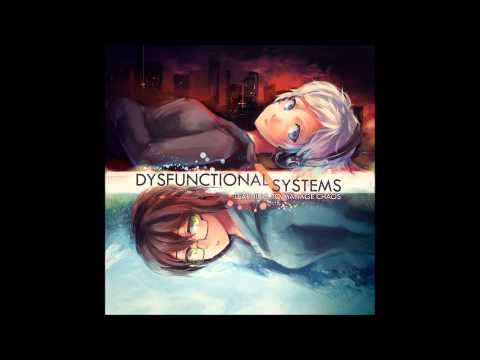
Functional Brilliance- Dysfunctional Systems: Learning to Manage Chaos Review

DS EP1 Review Cover.jpg
 Before I delve into the dirty bowels of this review, I would like to remind you of my recent Monday Mourning, and encourage you to keep it in mind as I discuss this truly exceptional piece of entertainment. I would also like to remind you this game's name makes writing a communicative title an almost IMPOSSIBLE feat. 
Despite previously releasing Juniper’s KnotDysfunctional Systems: Episode 1: Learning to Manage Chaos is the first truly interactive visual novel from the team at Dishcan Media. Set in an instantly enthralling Earth, steeped in futuristic utopia. Other worlds and planes of existence have been discovered and it is the duty of the "mediators" to keep the chaos of foreign systems in check. As Winter Harrison, players take control of the young mediator-in-training on her second mission to a world where a small and impoverished country suffers at the hands of its wealthy neighbor. A troubling matter for sure, but alongside her mentor Cyrus, it’s a supposedly routine operation.
WHAT COULD THAT POSSIBLE BE? WELL, WHY DON'T YOU PLAY THE BLOODY GAME FOR YOURSELF AND FIND OUT?
Merely possessing all the usual sci-fi workings isn’t enough to captivate an audience, a truth which Dishcan thankfully understands. While not a multiverse per se, the potential for a wide variety of settings is in place. Imagine any world you’ve read, seen, or heard about in fiction — that’s the potential we have here. Sci-fi should know no bounds. It should be one of the most creative vehicles for fiction, and all of my geeky desires were properly tantalized.
On the flipside, this isn’t Star Wars, or any other big name sci-fi universe which glosses over the depth of their characters. Thought-provoking concepts aren’t just toyed around with; they’re introduced with all the care of an explosives expert. Winter and the rest of the cast are bathed in a ocean of moral quandaries that will change them, for better or for worse.
It’s this sort of complex writing which makes Winter an incredibly sympathetic character. Having the fate of an entire country in your hands is bad enough at any age, but at fourteen it’s simply too much to comprehend. Still, it’s a "routine operation" by mediator standards, which only seems to worry Winter more. All possible routes of handling the situation, no matter how minor, have numerous permutations and potential consequences. One could easily feel overwhelmed. She does.
The only guidance she receives come from her moral compass, a meager amount of training, and the experience of a mentor she doesn’t fully trust. She's still a kid, which is made laughably obvious in relatable moments — such as her first beer. They’re subtle and seemingly inconsequential but at the same time serve to detail the inexperienced protagonist and the abrasive Cyrus. Of course, Winter’s somewhat naive and idealistic attitude directly clashes with her mentor, creating an awkward relationship between the two from the get go.  
DIALOGUE IS OCCASIONALLY STIFF, BUT OTHERWISE JUICY WITH DETAIL. 
Gameplay? Well that’s a funny thing to critique. The majority of the roughly two hour experience is spent reading and clicking to advance the scenes. You do make several choiceshowever, and their significance is made abundantly clear by the end. What’s spectacular is how they’re handled.
Choice-heavy and divergent path games have been popularized this generation by Mass Effect andThe Walking Dead. While they were great advances, I’m much more inclined to favor the style presented in DS:LtMC. In real life, we’re never certain of the consequences of our actions, and this is conveyed incredibly well. As a result, my decision-making was panicked at best.
You aren't thrown in completely blind; a mediator-in-training Winter collects information through conversation and posses a handy-dandy codex. Some of the information is relevant, some not so much. If the impact which was left upon me after completion is any indication of the future weight of my choices and their consequences, this series is going to be a joyride filled with regret and reverie.
A ROUGH ESTIMATE OF WHAT I LOOKED LIKE AFTER THE CLIMAX.
Without verging into nasty spoiler territory, the climax is memorable, profound, and left me stunned. As the highest marks were hit, I did nothing more than melt into my chair in complete awe. The story then comes back down to Earth, leaving you to stew in the wake of your actions. Things do drag on abit longer than necessary in the post-climax, — the epilogue feels fairly insignificant in comparison — but that didn’t stop me from being anything less than electrified with emotion.  
Visually there are few apt and equally stunning comparisons. While grounded in anime, Dysfunctional Systems is a clear divergence from anything I’ve seen before. Gritty and highly detailed, DS:LtMC is much more of a painting than your typical sterilized anime. Uniqueness cannot be tied to one singular aspect; it permeates the entire experience, which is made doubly apparent by the soil-your-pants-good soundtrack. A soundtrack that melds so many styles and themes into one beautiful anti-cacophony. It’s as if the composer employed a witch's cauldron and combined Mass Effect, jazz, electronica, contemporary JRPG melodies, and a plethora of other genres into one ecstasy-inducing auditory potion. It’s just a shame there are prolonged periods without any sort of music.
Much like in The Wolf Among Us’ case, the only reason you won’t be seeing this on my top 10 is that we won't be reaching the conclusion in 2013. Dishcan Media may be relative beginners to the genre, but it’s obvious the incredible experiences won’t stop here. Dysfunctional Systems: Learning to Manage Chaos is arguably the most enjoyable title from 2013. I’m left sitting here, debit card in hand, ready to shuriken it at my monitor in preparation for the remaining four episodes. so desperately want to jump back into Winter’s shoes and continue the near-perfect tale.
Alas, it looks like I’ll have to hold out a while longer. 
SCORE: 9.5/10
This was originally posted on Plus10damage.com.

Monday, November 18, 2013

The Most Pointless Debate

 How do you define the term video game? It’s a seemingly innocuous question, yet it spurs so many pernicious "debates" amongst our community. Ones which only serve to fracture and alienate us from one another.
Think back to the end of 2012 and early 2013. When it came time for every outlet under the sun to hand out their awards, two games in particular stood out. The Walking Dead and Journey. They even dominated events such as the Spike VGAs and the Game Developer Conference Awards. Now, not everyone agrees with these award choices, and that’s entirely okay. The problem is that many argued against the praise on the grounds that they felt neither one was truly a video game.
Truly a video game? 
Now, the discussion of what qualifies as "gameplay" has been had numerous times, even on this site. We even discussed it on our To the Moon spoilercast. I try to remain open-minded when it comes to defining games. Simplistic mechanics, a lack of a fail-state, and nontraditional gameplay are a few of the common staples in "Not Games." But none of those bother me, and I’ll gladly argue — to death — that they probably shouldn’t perturb anybody else.
Yet there are some who are of the opposite mind. "The Walking Dead isn’t a game, it’s just a visual novel. Heavy Rain should've been a movie. You don’t do anything in Journey besides walk around." These are the types of arguments on the other side of the debate.
A rose by any other name, my dear friends. Words are a creation of mankind. Hopefully we can all accept that. And like us, our words have evolved over the course of their existence. "Gay" is but oneenormously relevant example of this. So why can’t the definition of video game morph in the same manner?
Who are you to tell a developer that what they created was not a game? If that’s what they said they did, then that’s what they did. Sure, we have to keep things within reason. Writing a mathematics textbook and then claiming it to be a game is potentially going too far, unless its visuals are computer generated and if it posses structured interactive play. I guess then it's just the first video game that wears the trappings of mathematical instruction.
ARE THOSE NOT COMPUTER GENERATED IMAGES? ARE YOU NOT INTERACTING WITH THEM?
 The thing is, I don’t intend to argue this point to death. I know I’m not nearly convincing enough to sway the other side. I’m here to point out a fact. A cold, hard fact. The solution is staring us straight in the face. Maybe even shouting at us. If we would simply accept it, no one would be harmed in the aftermath.
If those shouting to the high heavens that titles like the The Walking Dead are Not Games would simply accept that they are Actual Video Games, the results would be almost singularly positive.
What’s the harm in conceding? The only wounds to be suffered are superficial. Let's all swallow our pride and end this debate, moving on to far more important matters like the sub-par representation of non-white males in games, or the threats developers receive when they disappoint their fans. I know this likely comes off as incredibly arrogant, but I really do find it difficult to convince any negative repercussions of a widened definition. Admit the category is ever-changing and that’ll be that. I assure you there is no Kool-aid, no secret cult.
No good comes from denying a game’s gamely existence, but plenty of good will come of accepting the fringe cases, embracing them, and moving on with our lives.