Showing posts with label television. Show all posts

Saturday, September 6, 2014

Psycho-Pass Review


I’m going to be honest here. Sci-fi which mixes the ramifications of AI, cyborg enhancements, and a highly policed state ticks most of my boxes. Psycho-Pass, is an example of such a show. Combining the future crimes prevention of Minority Report, the heavy technological themes of Ghost in the Shell, and a dab of Blade Runner’s moody cyberpunk cityscape, Psycho-Pass manages to unsurprisingly be one of the special ones. I say unsurprisingly because when you have the likes of studio Production I.G. (Ghost in the Shell) backing the writing of Gen Urobuchi (Madoka Magica) it’s no wonder things turned out so well.


Standing at the core is the question of free will versus happiness. Japan, in the year of 2113, has reached a level of domestic peace never seen before, thanks to the Sibyl System. While similar to other dystopian aptitude tests and mass security systems, it doesn’t merely restrict. The true purpose is to empower the individual with the ability to live a happy life while making a valuable contribution to society. The most intriguing aspect, and the namesake of the show, is the psycho-pass. Through country-wide surveillance, Sybil can scan the psyche of a human with incredible accuracy. Depending on the level of an individual's “crime coefficient” Sybil then determines the proper course of action. When too high, the police are dispatched in order to arrest or potentially kill the “latent criminal.” Effectively, Sibyl has created a society with such low crime-rates that the fear of being a victim is an irrational one.


What I appreciate most about the worldbuilding though isn’t this core conceit alone. The best fictional environments work with the background details. Little touches like a cyborg politician meeting the skepticism of an interviewer on the subject of full-body conversion fleshes out a cyberpunk Japan without shoving it down the viewer’s throat. Such a detail holds little relevance in the core plot, but it makes for a believable advancement of technology and societal reactions. So often these types of settings hang their hat on a lone advancement, when in reality there should be numerous. Casually slipping in VR chat rooms which share commonalities to present day social media like Twitter or YouTube creates not only depth, but organic believability. When such a backdrop exists it become a character of its own, permitting tangible humanity to the cast.


Now, occasionally some reactions are jarring, mostly in regards to the masses. Then again, you have to take into account how different their world is from ours. Seeing someone being beaten in the streets is certainly not an act we’d call unbelievable. But to the Tokyo of 2113, those types of things don’t happen. In an odd sort of way, conveying the world of Psycho-Pass is almost like trying to picture the concept of nothingness. It’s really, really difficult and I’m willing to mostly forgive the times where things fall flat because of the shear alien nature of the concept.


The good news is, most of these moments take place away from the rather strong core cast.


Through each and every episode I couldn't shake off the feeling I got from the secondary lead, Shinya Kogami. As part of the enforcers, he does the dirty work for the police so that they can continue to be investigators with as minimal risk to their psycho-pass as possible. As the narrative progress so grows the similarities which had me comparing Kogami to Trigun’s Vash the Stampede or Cowboy Bebop’s Spike Spiegel. Not in zaniness, or sly badassery, but very much in the whole internally troubled hero. There’s a desire to uphold Sybil’s justice, but there’s also a powerful urge to do what he thinks is best. Pulling him in either direction are the protagonist, Akane Tsunemori, and antagonist Shogo Makishima. While each and every character can be loosely tied to tropes of the anime medium, you’d be hard pressed to label any a caricature. Akane initially comes off as scared little girl who solely relies on her belief that Sybil works as a system, but in time evolves in intriguing ways. Shogo, at first, seems to be the stereotypical genius villain, but by the end I found myself sympathizing with many of his views. He’s brutal, but not for the sole reason of being an oh-so-maniacal murderer.


There’s a scene where he’s discussing books with an underling and goes on to describe how he uses entertainment as a mood modifier. Media can affect us, despite what either side of the debate may claim, and it’s nothing to be scoffed at. Instances like that help to shape not only an excellent villain, but in some disturbing ways, an admirable one.


No crime-drama is complete without a mystery and there is most certainly a large one at play. Again, it’s not so prototypical you’ll figure the whole thing out well before the major reveal. Themes such as how Sybil and free will do or don’t co-exist are brought into question and reflect not only the characters but our world as well. Few episodes don't advance the cloak and dagger outside of a mid-season break which takes a slightly hamfisted approach to revealing a character's background.


It’s no secret that anime isn’t the mainstream success in the west that it is in Japan. As an advocate of the medium, I take pride in converting the non-believers. Psycho-Pass makes my task all the easier. The initial half-dozen episodes are akin to procedural crime-dramas such as Law and Order or The X-Files. The difference is, episodes aren’t just one and done. Their villains and their actions have a lasting impact upon the overarching narrative. Of course, western filmic and literary influences bring a presentation and tone which feels more familiar to said audience.

There isn't a whole lot I can lay against Psycho-Pass. While there are a few issues, they're minor and never manifest in any sort of malignant mass. Dialogue trip ups and the rare off-beat animation are certainly irksome, but I’d be lying if I said the presentation feels amateurish. If you're generally unfamiliar with the medium or unhappy with the number of teen romances, Psycho-Pass is a show I'm more than happy to recommend. If you’re just looking for something worth watching, again, Psycho-Pass it is.


9/10

Thursday, June 26, 2014

Fargo Review


As Hannibal and Bates Motel have proven, shows based on classic films can end up with massively different levels of quality. Bluntly put, Bates Motel is utter shit while in its second season, Hannibal has become one of the premiere works of 2014. Now we come to Fargo, an FX production with an impressive cast and a loose relationship to the Coen brothers movie. Martin Freeman, Billy Bob Thornton, Colin Hanks, and Bob Odenkirk headline as the major names, but the big surprise is Allison Tolman who takes up a similar role to the film’s Marge Gunderson, as the only capable cop.

After three homicides set a small Minnesota town ablaze, Deputy Solverson (Tolman) is convinced her fellow officers have the case all wrong. And of course, they do, otherwise there wouldn’t be much of a show. Much like the the big screen edition, Fargo shows the stupidity of crime, as the awkward Lester Nygaard (Freeman) gets caught up in the homicides committed by a drifter named Lorne Malvo (Thornton).

For those more familiar with the works of the Coen Brothers, you’ll likely pick up on the similarities to No Country for Old Men. With some leeway, Brolin= Freeman, Bardem= Thornton, and Tommy Lee Jones = Tolman. Philosophical consistencies, such as how brave does law enforcement have to be in the face of overwhelming danger, can be found throughout.


As much as love the dark tone television has opened up to in recent years, it can be a overbearing. Fargo takes a welcomed approach of infusing what should be gruesome subject matter with just enough dark humor to create levity, but not so much it’s rendered incapable of hitting distressing strides. Malvo is the seemingly unstoppable force with years of experience as a hitman, taking what he wants from life. Watching how a single line of self-motivation from Malvo stirs up the belittled Lester into transforming his salary-man career and failing marriage into a Frankenstein creation is a wonderfully ugly evolution.

If there’s one glaring flaw, it’s the ending. Few things are more difficult in fiction than writing a satisfying conclusion. Predictable and safe are two descriptors you generally want to shy away from. While they won’t destroy all the good will built up, it leaves the audience feeling apathetic. A sterile ending is an unfitting climax to the craftsmanship which worked to build-up the tense atmosphere. The penultimate and much of the finale nail every aspect of anticipation of a big case coming to a close. Yet the payoff is… well, it’s mundanely realistic with a little bit of plot armor and a hole or two mixed in.

Quite possibly the message is real crime is often boring and the media / traditional crime-dramas have too heavy a focus on the action, rather than the people behind it. That’s if you're willing to do a bit of light stretching before a mental workout.

Philosophical quandaries aside, this is telling of some of the other issues as well. In retrospect a few of the plots are tertiary. Malvo's escapades with the grocery-store-millionaire boil down to little more than filler to showcase how creepy he is and tie-in the film. And yes, his humanity borders on animalistic but that's better conveyed through his interactions with those essential to the plot.


What is arguably most impressive is the creative direction. This could have easily been a re-imagining or prequel, but it’s not. Fargo is its own separate tale, and one can have never seen the film and still enjoy the show. The creators knew exactly how much to borrow from the Coen's. The bleak winter wasteland visuals, the amusing accents juxtaposed to the grim content, even the fake opening regarding a basis in reality. They provide for something intrinsically Fargo and Coen brothers but never step on the toes of the new.

Brief, yet poignant for nearly its entirety, Fargo proves the formula of bringing in big names for the short-term can not only work, but excel. Ten episodes exemplify what I wish we'd see more of from American television. Like True Detective earlier in the year, a tight narrative constrained to a season's worth of episodes can be more favorable than dragging one out over eight seasons. It's not impossible to create something with such life over a long period, but it's often best to have your story written from beginning to end before you start telling it.

The few flaws in the way of shaky finishes are heavily outweighed by what precedes them. It’s unlikely you’ll walk away thinking with new, earthshaking insight on the definition and capabilities of shows, but for those looking for a filmic touch to their television, then Fargo is it.

8.5/10

Sunday, March 30, 2014

I Watch Things Too: Horror On the Small Screen

Season 1.jpg
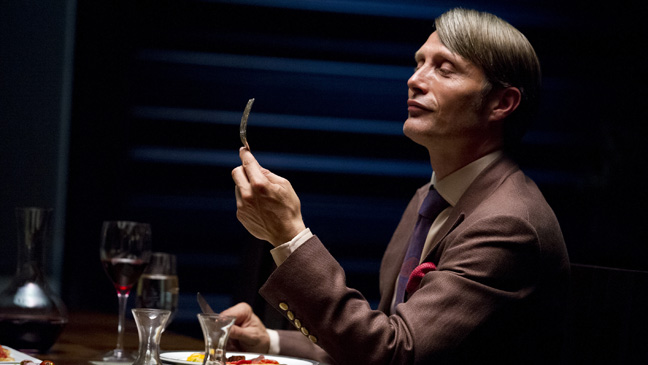
Hannibal- Lately there’s been a pique of interest in shows derived from from the big screen. Two of the most notable ones being The Bates Motel and Hannibal. Now it’s been some years since I’ve seen any of the Lectar related films, but Hannibal has always held a fascination for me. Part of it comes from my younger years of hearing about how horrific Silence of the Lambs is, and as any kid does, I rushed to find a way to watch such a “taboo” movie. The other factor which drew an older Jamison in was the psychology. CBS’ Hannibal plays up both surprisingly well.


While some of the gore exists for shock value, I’m still impressed by CBS for not shying away from the intimate brutality. Gruesome crime scenes don’t get me nearly as squeamish as seeing a human being living their daily life prior to a hard cut to Hannibal doing some cooking. The thought of what his prep work entails is far more unsettling than mutilated corpses constantly being shoved in the viewer’s face. And that’s the biggest issue. Sometimes it tries too hard to appeal to the mainstream with procedural episodes and shock value killings. Fortunately, much of that is absent by episode six and the remainder of the season is spent basking in psychological horror.


Despite what you may think, the centerpoint isn’t Hannibal, it’s FBI Special Agent Will Graham and his mental instability. Graham possesses what is known as pure empathy and because of it he is able to put himself in the mind of a killer, making the already unstable mind lose a grip on reality. His job, mixed with Hannibal’s manipulation under the guise of being Will’s psychologist, forces Will to be conflicted over what is and isn’t reality.


When not struggling to balance on the fence between procedural crime-drama and psychological horror, Hannibal leans towards the latter and is all the better for it.


Log Horizon.jpg

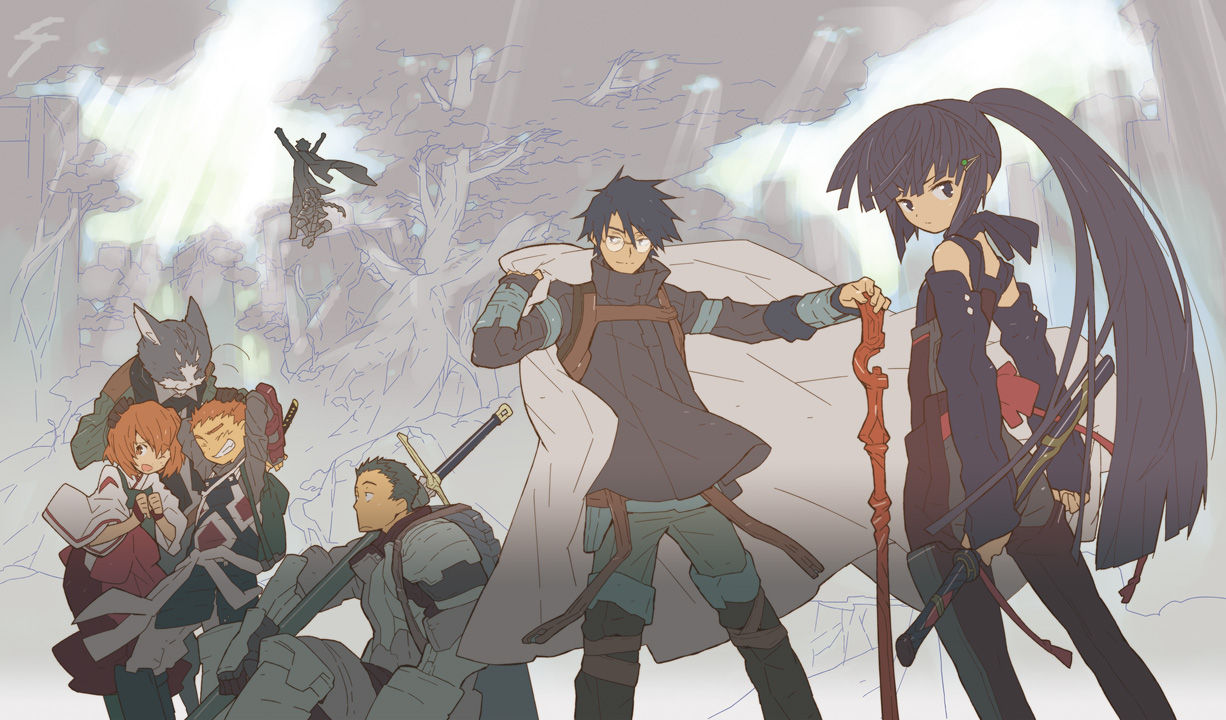
Log Horizon- It’s no secret video games and anime posses an overlapping fanbase. Log Horizon focuses on a group of MMORPG players caught inside a game for an unknown reason. A similar premise to Sword Art Online, but actually handled with a degree of storytelling prowess.That’s not to say Log Horizon is great, because there are numerous flaws, but it is enjoyable nonetheless. Even as non-fan of the MMORPG genre, the intricate systems and subsequent world-building are thoroughly enjoyable. Watching is like diving into a mechanically deep video game.


Protagonist Shiroe's mastery of his world makes for a compelling near anti-hero. I say “near” because while the introspective into online games is compelling, the tone never becomes appropriately grim, which both hurts and helps. You’d rightfully expect the trapped gamers to be desperately trying to find a way back to reality; this isn’t the case. It’s mentioned, but a fourth of the way through the issue is mostly forgotten and there’s an air of content with making the world of Elder Tale their new home. Possibly, this is an intentional commentary on how easily people get sucked into virtual worlds more distressing than our own, but I suspect the opposite. The handling of game mechanics is smart, but Log Horizon is not giving any sort of social commentary.


The light-hearted happenings of the typical anime variety are entertaining. Akatsuki’s beating of Noatsugu after he makes some lewd remark, or how every bespectacled character manages to sinisterly push-up their glasses every episode provides plenty of comedic relief.


Upon death everyone but the NPCs respawn with zero known ramifications which removes the ever-important tension. Roughly half-way through this is resolved in a creative fashion of introducing conflict without having to rely on the biggest drama of all. I can appreciate a show managing to inject turmoil without having to rely on death or relationships too heavily.


Season one is finished, and season two has already been confirmed for this fall, so now would be the ideal time of getting into the series. It’s a little slow moving but the amount of knowledge about the subject matter and how it’s infused into the form of a anime is impressive.


Nisekoi.PNG

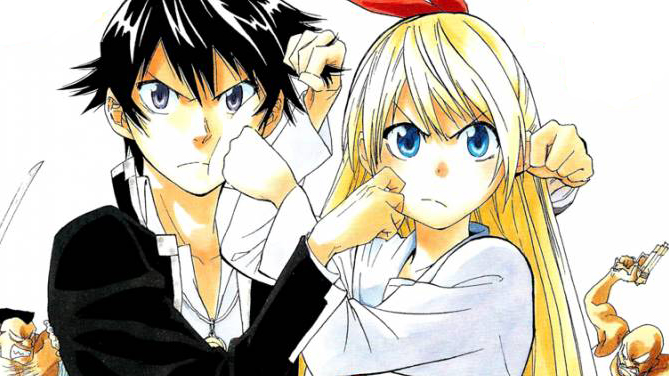
Nisekoi- You know I’m not opposed to the cliched high school setting, but you’ve got to draw the line somewhere. There’s an interesting premise in the depths of Nisekoi’s school-hood schluck. Two teens who are the offspring of opposing Yakuza families are forced into a fake relationship to keep the peace. It’s essentially Romeo and Juliet, but in reverse. HOWEVER- and that’s a big however, shamelessly bathing in every single trope, cliche, and fanservice nonsense under the sun is unforgivable.


It didn’t start too obnoxiously. Watching the Yakuza's kooky attempts to expose the false love or pamper Raku and Chitoge in uncomfortable ways serve its purpose. Quickly, each ounce of uniqueness evaporates and what remains is bland regurgitation of the worst of what the anime industry has had to offer in recent years.


What does Nisekoi in is episode nine. Hot baths and teenage boys trying to spy on the girls is nothing new. Not terrible on its own but when paired with every other anime stereotype such as tsunderes, crushes falling over each other, and androgynous characters being confused for the opposite sex; it becomes head-bashing tiresome. If there was more to it than being a straightforward harem, then I could forgive Nisekoi.


But there isn’t; so I wont.


Vash.jpg

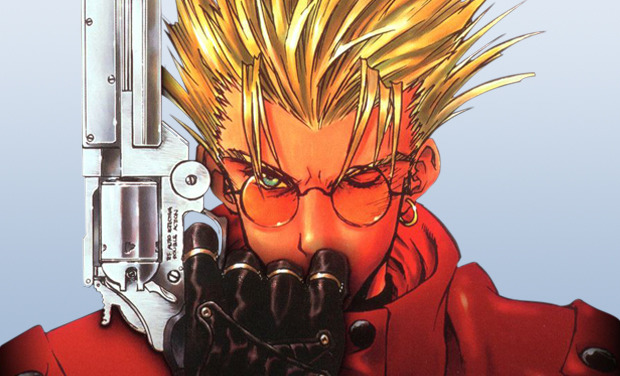
Trigun- What’s the best show I discuss this time? Trigun...easily.


A year or so ago I gave it a shot and the first episode, while not terrible, failed to enamour me like I hoped. This was the famed Trigun after all, an anime oft mentioned in top 10 lists all over the interwebs. One distraction led to another and I only just recently jumped back in. Turns out, I was kind of an idiot for not sticking with it.


Through the first eight or so episodes the goofiness greatly outweighs the meaty aspects, which cleverly reflects the character of Vash through meta-narrative. What initially appears to be a bothcer-led romp of episodic space-western goodness, reveals itself to be much more. Death and destruction follow the infamous outlaw, Vash the Stampede, wherever he goes. Curiously enough, he’s never directly responsible, as he prides himself on being able to get out of any situation without taking life. Even so, he’s always bearing the brunt of the blame, which is why two insurance agents have been sent to record his escapades.


Trigun, much like the other revered anime of 1998, enigmatically reveals its complexities the further you dive in. If its characters tell us anything, what you see isn’t always what you get. Milly’s brutish appearance, Meryl’s seemed bossy attitude, Wolfwood’s- my favorite- reflection of Vash in priest form, and of course Vash’s struggle to accept his past and how his power affects those around him, meshes together to create some of the most well written anime. From 13 and on, each subsequent episode ramps up the tension and weight of every fight as the final confrontation draws nearer.

I can comfortably claim the second half is among my favorite arcs on television. If only the conclusion was as satisfying as what led to it. The writers certainly took it in the ideal direction, but a single episode to wrap-up wasn’t enough. It’s a solid ending, but I was expecting Trigun to go out with more of a bang.


Barring some production value issues, and an ending hastily done, I can’t suggest Trigun enough. Much of it’s tones and themes are steeped in spoilers, so how about you go watch it for yourself.


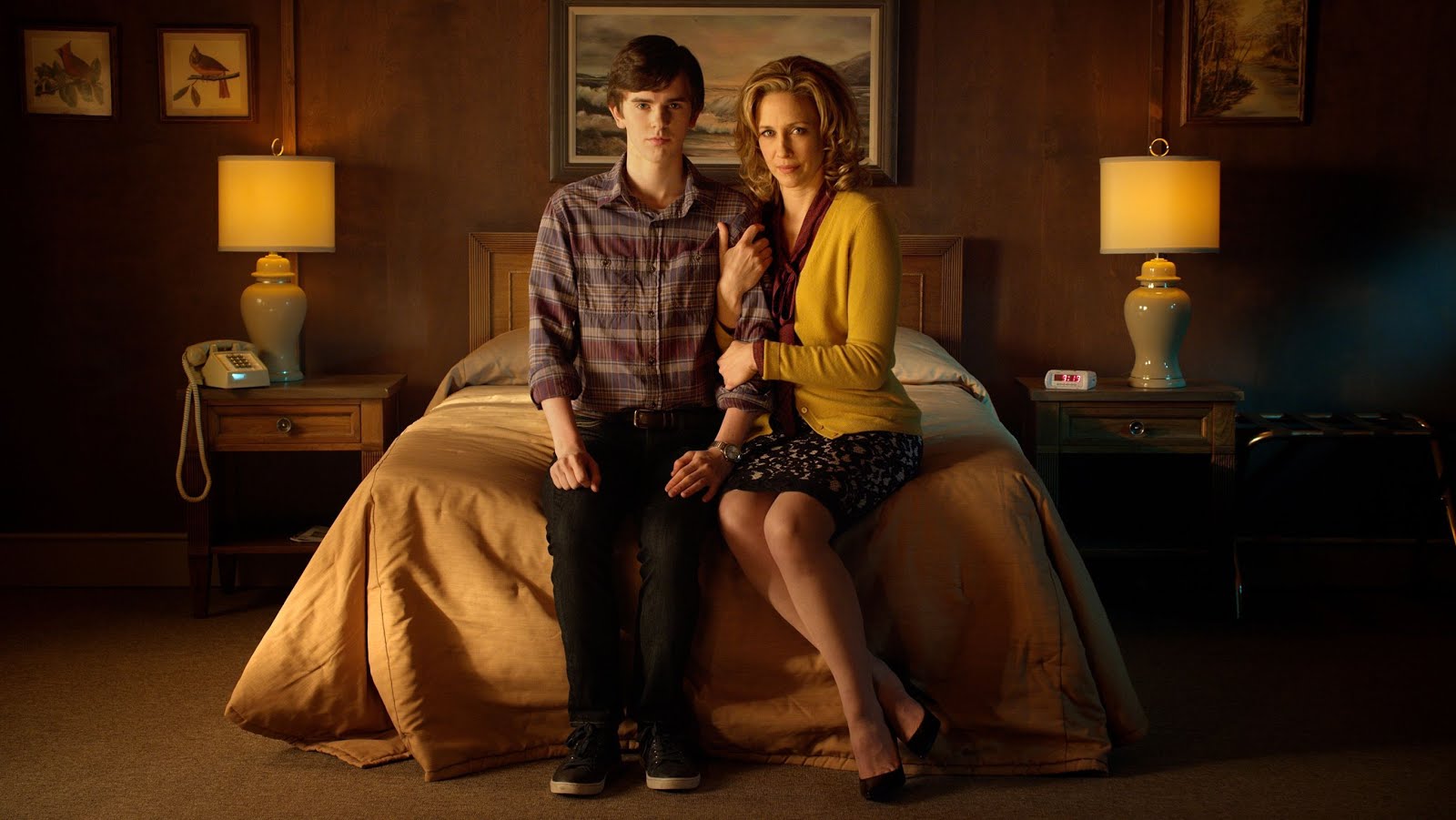
Bates Motel.jpg

Bates Motel- Yes, like Hannibal this a contemporary prequel to an enormously popular horror film. Unlike Hannibal, Bates Motel meanders with no clear purpose.


The first episode -this is a spoiler and I don’t care- displays a lack of tact. Eschewing any sort of tension, Norman helps his mother cover up the murder of the former motel owner. The idea of a prequel is to see the a transition from what was, to what we already know. What could be an interesting character development of Norman progressing from semi-average teenager to the mother’s-boy-murder he is in Psycho, doesn’t exist. Instead we have an elongated version of the film, but without all the talent of Alfred Hitchcock behind it.


This isn’t the kiss of death though. Hannibal Lecter is- for the most part- already Hannibal as we know him at the start of his show.  Adding piss to the wounds though, Bates Motel takes a Twin Peaks approach. But again, without the talent of someone equivalent to David Lynch, it ends up coming off as a soap-opera. Every single character- and I mean every single character- has some sort of tie to the shady side of Generically Named Oregon Setting. It’s a small town, big secrets sort of thing but fails to be anything more than nonsensical. A hidden pot farm in the mountains, you say? Why wouldn’t there be? And why shouldn’t the cops be trafficking sex slaves? It’s drama for sheer sake of it.

There are fleeting moments where Bates Motel dares to be slightly above average, particularly when Norman is trying to fit in at high school, but for every minute of quality there’s 44 of so-so to utter bullshit.

Monday, December 23, 2013

I Watch Things Too: Something for the Bebop Fans


Wolf’s Rain- Humanity has fallen, the world is dying, and the end times have arrived. For such an oppressive world to birth an inspiring journey around friendship, brotherhood, love, and faith would seemingly be out of place. Leave it to Cowboy Bebop veterans Keiko Nobumoto (creator/writer), Tensai Okamura (director), and Yoko Kanno (composer) to pull such a tale off against all the odds.

Initially the meager setting explanation and how four wolves came to be able to shift back and forth between their human and lupin forms is slightly off putting. Fortunately the mystery surrounding what happened and what’s going to happen is reason enough to carry on. By the fifth or sixth episode there are enough breadcrumbs to become engrossed in the sympathetic cast.

Giving human forms to the wolves could have been a lazy and cheap tactic for character relatability, but their lupin core is at the forefront. Wolves are not played up as this downtrodden minority grasping for acceptance in society. The dynamic is inherently beneficial at avoiding cliches and thusly each episode ends on a profound high note.

When getting into a groove of several episodes, you’re not watching from the comfort of your home. You’re apart of the journey. Kiba, Tsume, Hige, and Toboe’s struggles and successes are your own. You not only desire to see what happens next; you want to watch them reach their ultimate goal: Paradise.

For lack of a better term, the 30 episodes provide an extremely heartfelt story. Not a single character is a weak link, and the ever-amazing Yoko Kanno captures all the right moods with the expertise you’d expect from one of the best composers in anime.

Clearly no compromises were made during production. There was a vision and it was achieved near flawlessly. So commit Wolf’s Rain to memory. It quickly became a favorite of mine and I’m positive many of you will enjoy it too.


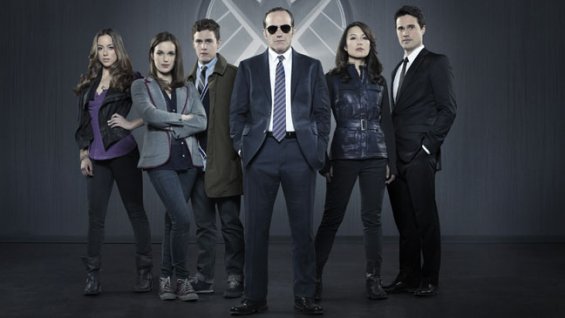
Agents of S.H.I.E.L.D.- I’ve been known to harp on American action in the television format fairly often. It’s been some time since I’ve been captivated by such a thing, but I went into Agents of S.H.I.E.L.D. with an open-mind. I do enjoy The Avengers- and much of Joss Whedon's work- so what was the worst that could happen?

Imagine The Avengers and Firefly having a child? Sounds pretty terrific right? That’s the clear intentions here, but the result is a mildly lovable bastard.

The above picture is actually rather helpful in explaining. See those outer most, generic looking folks? Well, they’re exactly what I expect out a CBS show. Not too risky, and cliched as could be. Then the pair on the left, well they’re not too bad. Whedon’s scripts are often known for their wit, and the scientific duo manages to hold their own. The Chinese women,- she’s actually Chinese, I’m not being ignorant- well she’s obviously a stone-cold badass and master of the martial arts. Really flexing those creative muscles there, boys and girls.

There is of course Phil Coulson, chosen solely because everyone else of note from The Avengers would have put them in the poor house or are too busy. Of course they forgot he died and now some sort of silly narrative retconning is being used as the big tease.

Despite these fairly significant flaws, I’m still willing to watch the second half when it comes on in 2014. Watching an inconsistent cast fly about the world and attending to matters Iron Man and friends couldn't be bothered with is surprisingly fun. The mystery surrounding the shadowy Centipede operation carries enough drama to keep from starvation. As much as I harp on the lack of creativity behind the cast, they do get the job done, albeit in a spectacularly average manner.

Can I recommend AoS? Not easily, but if your access to a variety of shows is limited and you’re dreadfully bored, give it a whirl.


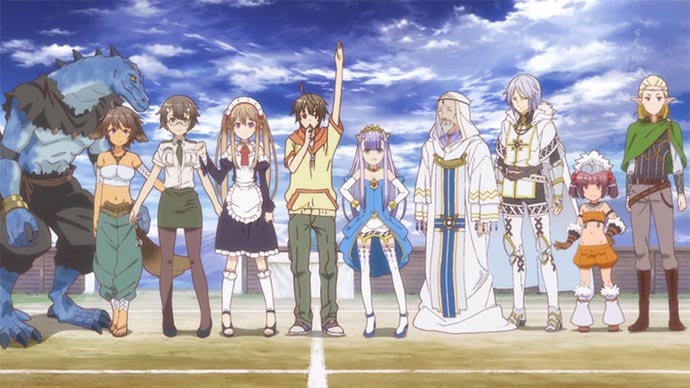
Outbreak Company- If pandering can be done right, then Outbreak Company has achieved such a goal.  

In the world of OC, young otaku Shin’ichi has been hired as a diplomat and sent to a fantasy world, with anime and manga in hand. Why? Because the Japanese government desires to profit off the export. That’s as complicated as the story ever gets and the comedy is almost entirely reliant on hyperbole of the very culture it focuses upon. Chances are if you’re a more casual anime fan, Outbreak Company isn’t for you.

However if you are a member of the insular community, you very well may get a kick out the inside jokes. Are they terribly clever? No, it’s mostly “Ha ha ha! The boy who was a hikikomori, is now surrounded by the real versions of the 2D things he idolized.”

Early on there did seem to be some sort of message. Not terribly deep, mind you, but more than most comedic anime. In the fantasy world there is all sorts of racism and classism, but otaku culture brings them together. Considering the mudslinging otaku are subjected to from time to time, this is a right bit of irony, but quickly dissipates by the halfway point and then reappears in the final two episodes for a rushed conclusion.  

Outbreak Company isn’t great by any stretch of the imagination, but the cheap jokes are entertaining, even if they mostly boil down to having a laugh at one’s self.  In 12 episodes not a whole lot of note happens. So if you’re looking for something lighthearted and self-indulgent, by all means, watch Outbreak Company.


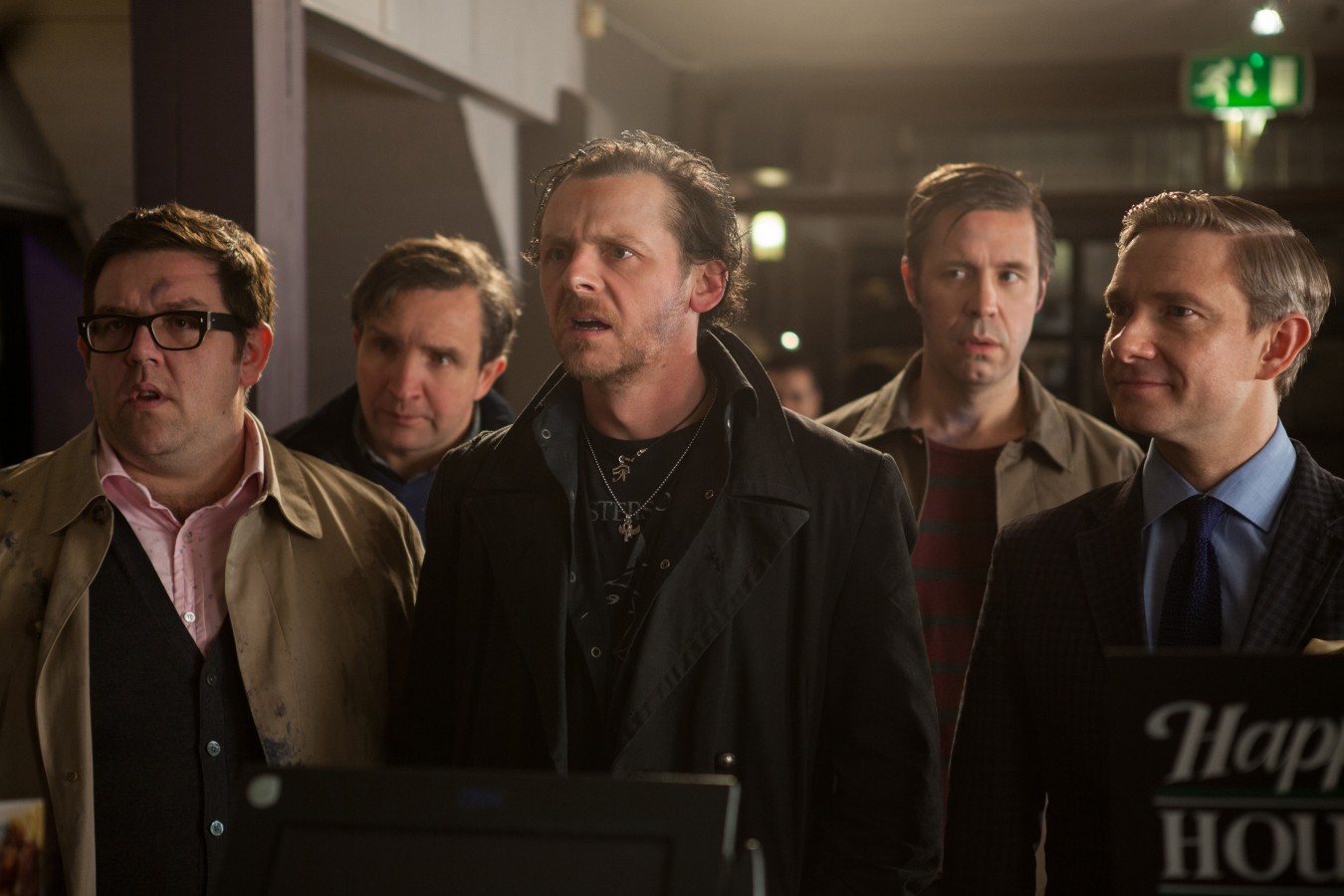
The World’s End- As a fan of both Shaun of the Dead and Hot Fuzz, it seemed certain I’d enjoy the final piece in the Cornetto trilogy. And surprise, surprise I did.

TWE is your standard fare of friends getting drunk, and causing a ruckus. Thing is, while reluctantly revisiting their old stomping grounds, they uncover an alien plot to assimilate Earth’s population. By Cornetto standards this is nothing too unusual and certainly gives way for plenty of hilarity.

Unusual though is the semi-serious tone the movie takes in the latter portion. I won't outright spoil the intended message of the social commentary. Think a more modern Dr. Strangelove. Although I’m sure plenty will call me crazy for comparing anything to the “holy grail” of comedy.

Holistically, The World’s End keep the laughs going at a steady pace with the occasional dry spell, and brings a fitting end to a strong trilogy of films.


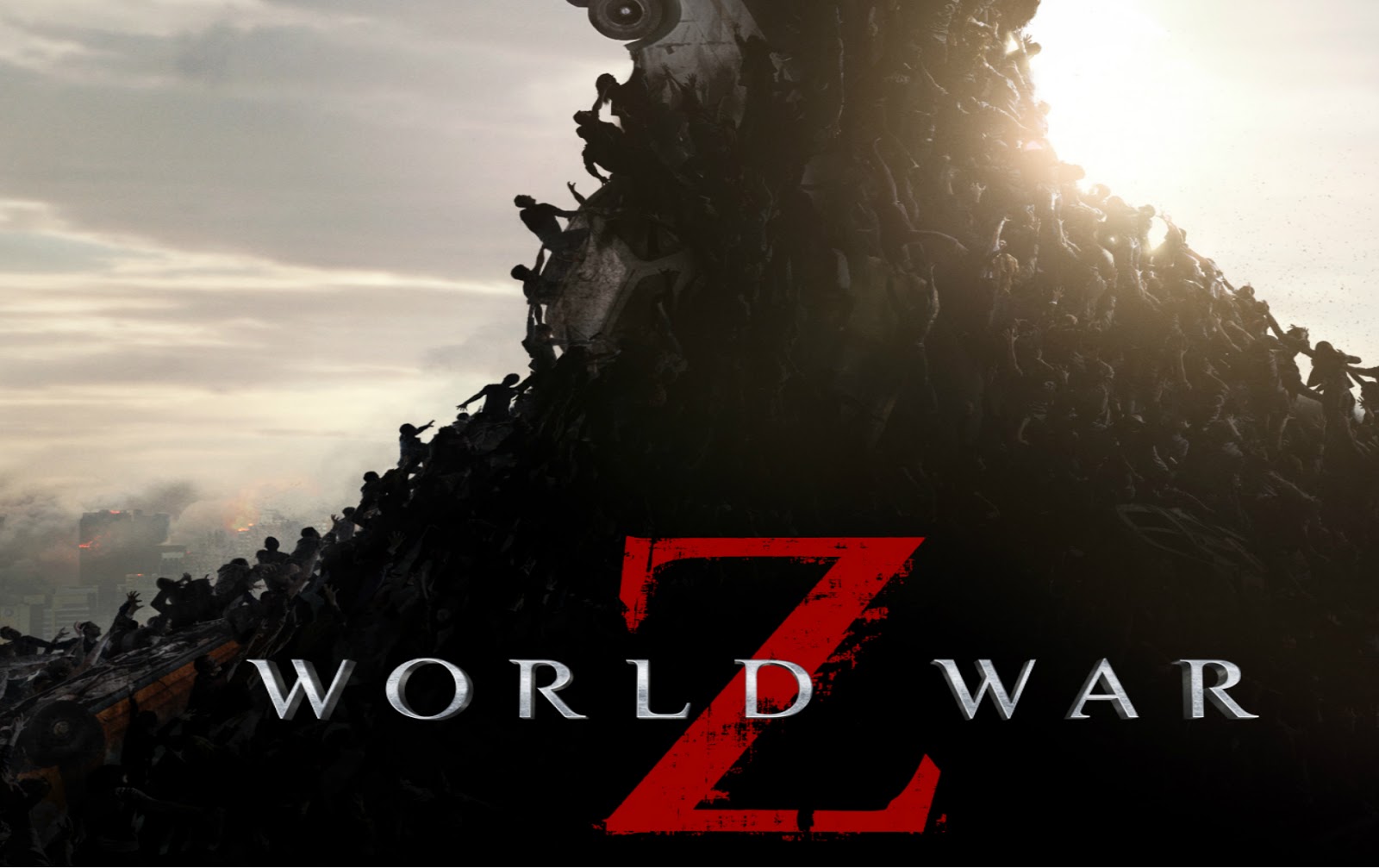
World War Z- My expectations were low. Another zombie flick is not exactly something we so desperately need, and opinions were mostly negative. I came out the other end kind of surprised though. It’s not great, or even good really. Now applauding a film for being average may seem odd, but I mean it when I say my expectations were low.

The plot of Brad Pitt’s character globe trotting runs out of steam thirty minutes in and there’s not a whole lot of substance to speak of, but man did they nail those moments of mass hysteria. In the initial Philadelphia outbreak and subsequent Jerusalem one, when the shit hits the fan, it hits hard. The cinematography and set designs give a great sense of scale. There’s not only up-close streets shots, but sweeping ones encapsulating the fear of an entire city.

Oh, and bonus points for not pretending the concept zombies has never existed in the film’s universe. It’s more of a pet peeve of mine wisely avoided, but it always seems silly when you hear everyone asking “what are these things?” Zombies you dolts! Don’t pretend like you’ve never heard of them.

While I’m not suggesting you go and watch World War Z right this second, it wouldn’t hurt to catch it on a rainy day.