Showing posts with label TV. Show all posts

Friday, July 4, 2014

The Kawai Complex Guide to Manors and Hostel Behavior Review


“Senpai noticed me.”


Another internet meme born from the world of anime. Evolving from cases where a younger person has romantic interest in an elder / superior and attempts to get themselves noticed. Kawai Complex- as I refer to it because the full title is longer and more unnecessary than Shia Labeouf’s acting career- is “senpai noticed me,” the anime.


Now, such a claim about ties to meme humor would appear to be damning, but it turns out Kawai Complex is one of the bigger surprises of this spring season. As a comedy / romance, it centers around Usa, a highschooler who has recently moved into a boarding home. Usa soon finds out however that not only are his fellow tenants a bit out there, but his crush also calls the complex home. As you’ve likely imagined, plenty of hijinks ensue while Usa awkwardly attempts to woo Ritsu during the havoc created by the other residents.


Many, even among devout anime fans, aren’t keen on the more comedic realms. Admittedly, I’m quite picky because this area tends to be highly derivative and filled with many of the valid reasons why some avoid anime. By no means is Kawai Complex overflowing with originality. The premise, the sexual innuendo; both tricks of a genre whose foundations are trope filled pillars.


Wisely though, much of the show takes place at the boarding home where the cast is sufficiently diverse. Little twists to caricatures like Shiro the pervy masochist who posses a childlike love of life and is ultimately harmless, keeps things from getting too familiar. Occasionally these types of anime walk a thin line of sleaze. There’s an episode in which Shiro befriends a young girl. Much like the audience, the residents’ minds instantly suspect the worst. The script is quickly flipped when everyone realizes they’ve jumped to an unfair conclusion. Such details are interesting twists to keep the viewers from having everything figured out from the get go.


While an overarching plot exists, there’s a very slice-of-life presentation. The episodic and comedic nature mix for the usual hit or miss quality. There’s never a bad episode, but some develop to be more tertiary in the plot department. This issue isn’t localized to an episode or two as the finale builds to what can only be called resolution lacking. The trouble here is the light novels of which the anime is based on has yet to be finished, so a satisfying conclusion was likely never in the cards. Additionally, there’s a good chance Kawai Complex could end up like other anime and never receive a second season.


There is an OVA planned for later this year, and it’s quite possible to wrap up the story with a single episode. Hopefully this is the case as the awkward teen romance of Usa and Ritsu is amusing enough to warrant a proper finish.


My expectations were low as I began the series thinking it would just be another one of “those” anime. Things quickly turned around as I came to realize this wasn’t another pandering mess. Much of the humor can be crass but occasionally witty too. While not a thinking man’s comedy, there were several times I had to double take on an unexpected crack at Usa’s innocence by Mayumi, or Shiro’s overly earnest masochism. There are some genuinely heartwarming moments too, which aren’t played up to staggeringly cheesy levels. They simply serve their purpose and make way for the comedic relief.

Kawai Complex is the culmination of a studio’s work to do enough to separate itself from the pack. From its water color with a slight haze visuals, cast, and plot, rarely did I feel like I had seen an anime exactly like it before. Revolutionizing a genre isn’t a must and sometimes it pays to fine tune what you already have. Of the roughly half-a-dozen comedic anime I’ve seen this year, this is most definitely my favorite.
8/10

Wednesday, July 2, 2014

Ping Pong the Animation Review


Familiarity is an enormous factor when one ponders what to watch next. Humans have an inborn fear of the unknown. Something as minor as art style can’t deter us from a potentially good time. I do by my best to avoid such limitations, so when I see people not giving Ping Pong the Animation a chance simply because of its visuals, I’m so utterly disappointed. As a critic there is nothing more validating to my work than someone thoroughly enjoying a piece I’ve suggested.

I get it, Ping Pong’s character designs are not beautiful in the same way the highly detailed or cutesy anime we have grown accustomed to are. The industry has been spinning its wheels for the past few years though. When something nontraditional comes along like Ping Pong, it’s reassuring to know there are artists out there pushing boundaries of what has become an increasingly homogenized medium.

If you haven’t nixed the art style, then congratulations, you are neither a troglodyte nor someone who won’t be enjoying a great show.

At the heart of Ping Pong is the timeless struggle of competition, rivalry, and where talent places those within the the grander trials and tribulations of life. The tools of choice are a handful of high school ping pong players in Japan. Yeah, yeah, another high school setting. As I firmly believe though, tropes can work when handled in refreshingly nuanced ways. Its cast- while not bustling- poses for an array of conflicts. There’s Kong, who was kicked off the Chinese national team and forced to find a place in his new home. Kazama, the mountain sized champion of Japan whose machine-like ambition and family pressure make him sacrifice much of his youth. Peco and the ironically nicknamed Smile are the stars though as they represent two sides of the same coin. Peco is the natural talent who became complacent with early success and Smile is an underachiever with an apathetic approach to everything.  

In the mere 11 episodes, the arcs undergone are as robust as a multi-season show. With so little time there isn’t much room for fluff, which does exist. There’s a character who appears only a few times but never really amounts to much. His basis, an average Joe who has no special talent for the sport, juxtaposes well but because of the lack of detail his slim arc is unnecessary.

Typically when one thinks of the sports genre- from any arena of entertainment- it’s a wasteland of tropes, where pandering and cheesiness beats out any legitimate plot. Despite the initial impression of a slow start, Ping Pong is much more character focused. As I mentioned before, this isn’t a cast to roll your eyes at; subsequently there’s little to no ham-fisted twists and turns. Refraining from spoilers: the ending is an artifice of laudable degree. Not only does it thoroughly satisfy without having to do the cliched last-minute heroics, but pulls an about face on much of the core perspective.

Something interesting brought to light is the stark difference between sports fiction and live sports. As much as stories of player comebacks from injuries or off-the-field struggles spice up real sports, it’s not the focus. I don’t sit down to watch the Flyers play hockey because I’m interested them in as human beings. I watch because of they’re on-ice actions. It strikes me as rather odd the sports genre at large often filters out the human factor during the climax. Ping Pong on the other hand intentionally downplays matches, with quick cuts and the brushing over of final scores. The shiny medal matters little in comparison to the internal conflicts winning and losing provides.

Much like last year’s Aku no Hana, with its rotoscope visuals, Ping Pong the Animation has become a hidden gem of its respective year. Those who are capable of getting past the unique art style will more than likely find themselves thoroughly enjoying it. Those incapable of doing so; I feel sorry for. There’s no piece of entertainment which pleases all, but by not giving such a fine piece its fair shot is a disservice to yourself and the medium.

9/10

Thursday, June 19, 2014

Game of Thrones Season Four Review


(I did my best to dance around spoilers. You've been warned.)

If you had asked me prior to the fourth season of Game of Thrones what my five favorite shows were, it would have been among those listed. With three incredible seasons masterfully crafting a world with depth and brutality most have never associated with television, it has rightfully earned the praise received.


Expectations can be a funny thing though. When you expect little and receive much, applause tends to be all the louder for it. When there’s an expectation for greatness, outcomes falling short are criticized more heavily. In the cultural zeitgeist that has become Game of Thrones, it’s rather taboo to speak any ill words of it within earshot of those caught up in the hype. Criticism of any sort is seen as hate, which I vehemently disagree with. If you love something, you want it to be the best it can be. This is precisely why I see the fourth season as a step down from the lofty heights of its predecessors. It didn’t meet my expectations: plain and simple.


With that said, a season worse than the others still leaves plenty of room for greatness.


While co-creators David Benioff and D.B. Weiss prefer to not sum up each iteration with a running theme, this was undoubtedly the year of the younger faces learning how to deal with the unforgiving nature of their world. Jon, Sansa, Arya, Bran, Danny, all of them evolve in ways showing a pragmatic ruthlessness which we had only seen in drips. The trouble is- outside of Sansa who often plays second fiddle in her scenes- the evolutions are stretched and inconsistent.


Danny in particular is the biggest offender. For three seasons now we’ve seen her building up an army. What came of her latest exploits? Well, she now presides over the cities which she fought to free from slavery rather than crossing the Narrow Sea. The interesting result is she’s now gotten a taste of what it’s like to rule, but that’s only "well" executed across the initial four or five episodes. The remainder of her presence is little more than a reminder. A tacked on romance between Grey Worm and Missandei, repetitious court sessions, a brief finale scene of dragon punishment; none of these compare to her presence in the latter moments of the previous three seasons. Her arc has been all about anticipation and payoff. Seeing her get wronged and then bringing satisfactory justice to those at fault, while continuing to build up her eventual arrival to Westeros.


And that sums up this season’s big issue. Too many characters. While at one point Game of Thrones’ masterful manipulation of more plots than seemingly possible was a strength, the continued addition and fracturing of plots paved the way for hollow presentations. Stannis, Theon, Ygritte, Brienne, Gilly; even bigger names like Bran, Danny, and Arya all beg an important question. Do you miss them when they aren’t on screen? Most of the time my answer is a resounding no. The cast has become so large you can hardly say there was a major focal point. Season one had Ned, two had Tyrion, and three took a collective approach with a handful of those in power vying for control of the Iron Throne. Season four is much more of a conglomerate, where the creators seem to aim for equal importance of all and end up with a less impactful presence across the board.


But what of the second draw? The cruel treatment of all characters by which author George R.R. Martin has become known for. In its unpredictability, Game of Thrones has become somewhat predictable. At least when it comes to death. This isn’t necessarily a bad thing, just a new challenge. If the audience knows no one is safe then how do you still make them care when death comes knocking? The solution is admittedly straightforward, but not all that easy to execute. You’ve got to make the characters worth caring about. A prime example would be the closing moments of the episode titled “ The Viper and The Mountain.” I knew a certain someone’s demise was a possibility, but damn if there weren't  Attack on Titan levels of uncomfortability on resonating outward as I viewed. Every act of betrayal or untimely demise feels deeply personal, because of how well done the majority of characters are. Though one can now suspect anytime we starting taking a liking to someone they're most likely next on the chopping block.


While it’s true most shows save these hard hitting moments for last, Game of Thrones has a history of packing penultimates with what many consider to be the high points of each season, while the finales act more as hype machines for what’s to come. Thankfully this wasn’t the case. Not that I dislike the approach, but the aforementioned issues wouldn’t allow for fewer plots being wrapped up. Stannis, Bran, Arya, and Sansa; they’ve always had potential and it’s nice to see it being realized.


What interest me most though is the coming tonal shift. Those wights, Bran’s magic, and of course Danny’s dragons are going to have a major effect on the fantasy versus political machinations balance. Come season six and beyond, I can see this being a welcoming alteration. By no means has the backstabbing and less fantastical elements grown tiresome, but considering the creators were aiming for seven seasons before G.R.R.M. expressed interest in an eighth book, such an evolution would help keep things fresh.


Game of Thrones continues to be one of the best shows currently airing. While I’m disappointed it hasn’t more confidently strode into the throne which was once held by Breaking Bad, I’m unable to say that it’s anything less than holistically great. Season four certainly has balancing issues in regards to its overabundance of characters, and one particular death didn’t hit nearly as hard as I would have liked. Conversely, the crux of what makes the world such a complex and believably morose place still holds true. The cast is a superior one to most on television these days, and the writing and acting remains mostly indomitable. Other than that whole rape scene which the director denies is a rape scene. That's easily the lowest point of the entire series.

Is Game of Thrones the best show of 2014? No, I can confidently put a handful ahead of it. It is however more than worth your time and if you’ve not already jumped on the Game of Thrones wagon, this is nothing to be discouraged by.


8.5/10

Monday, April 14, 2014

I Watch Things #19: Winter Round-Up

Season 4.jpg
The Walking Dead- I’ve made my like-hate relationship with The Walking Dead well known in the past. Long stretches of quality episodes always find a way to be completely undermined by one or two really bad ones. The first half of season four made this abundantly clear. A new executive producer subtracted some of the B-movie zombie flick and added more of character-driven narrative, akin to the Telltale game. Even the Governor manages to draw interest, but that soon dies within the final two episodes.
The second half does no favors early. Contradicting “lore” when Michonne uses her dismembered walkers as cover and inane contrivances which see the return of one particular character out of the blue. In typical TWD fashion, it manages to turn-around before too long.
I’ve always said Darryl has the potential to be the best character. He’s the one person who’s actually been made better by the outbreak. Rick and the crew are always trying to keep their humanity while Darryl tires to gain his. Having Beth bring him back from the brink, being around the real morally abhorrent; it displays a side of him the previous three and half seasons gloss over. It’s not just Darryl either, the entire cast is made better by a much more reserved approach. Divided, and facing more personal issues rather than “oh no, bad guys are going to attack our home,” the true weight of an apocalypse sets in.
But guess what. The finale, forgot to be a finale. You could argue the main plot is the group getting back together, but regrouping in a cannibal settlement isn’t exactly a resolution. People are going to die, that’s a given but what we’re left with is a tease. The plot has yet to hit its climax, which is why the finale would have made for a great penultimate for the season.There’s a whole lot of build-up to an obvious twist, and a fade to black.
Somehow, someway every time I say I’ve almost given up on the show it jumps right back. While never great it manages to keep being incredibly accessible with streaks of “this is almost as good as the game.”


Ryoku.jpg

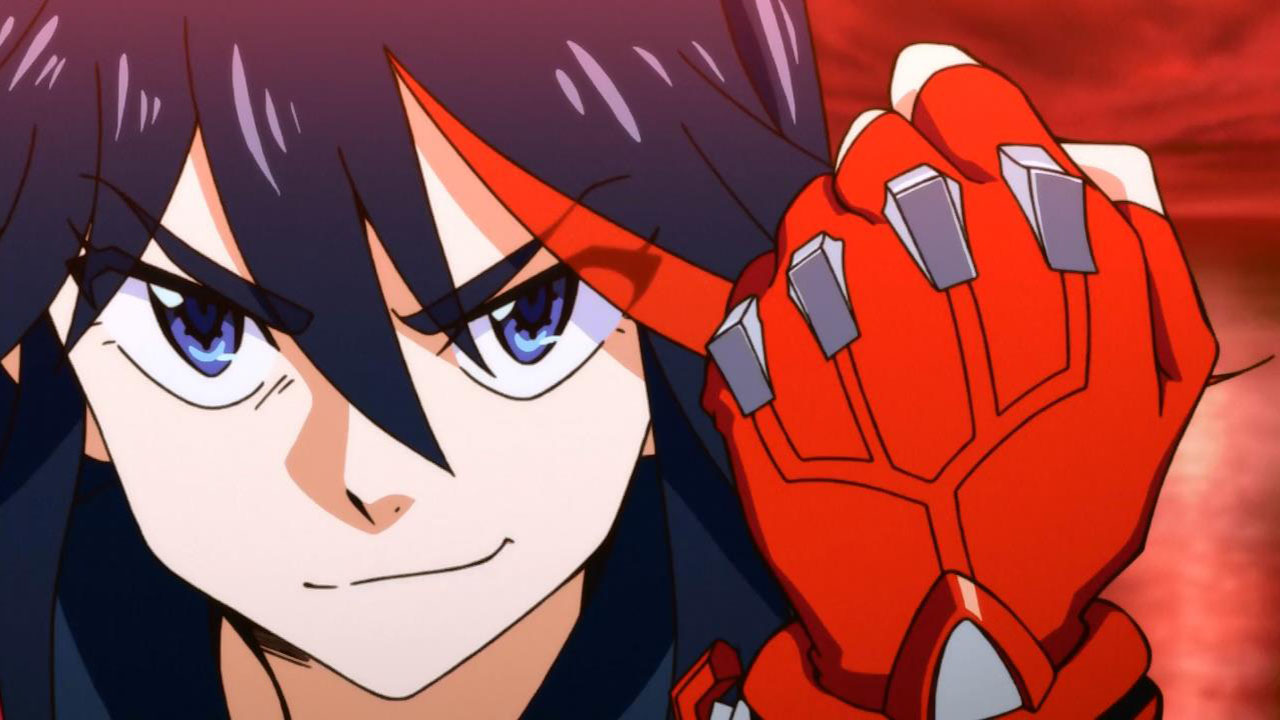
Kill la Kill- I often advocate anime to those unfamiliar with the form. I would love to see a day where my social media is obliterated by anime talk, just like it so often is by Game of Thrones or The Walking Dead. Kill la Kill is the last place someone with reservations about the medium should dive in. I wasn’t sure of it myself when I started. The level of nudity and lewdness is hefty enough to make the biggest of otaku feel uncomfortable. Give it a few episode and you’ll realize this is far from the truth. Kill la Kill is unabashedly parodies and satires so much about otaku entertainment but in a fun, non-combative way. The plot is centered around the use of school uniforms to empower student-soldiers in a dystopian Japan, ruled by academies. The resistance force; these guys. Best of all, the lack of clothing isn’t specifically focused on one sex. Kill la Kill goes both ways, and does a good job in making sure it’s not just pandering to a male audience.

Despite the sexulization, Ryuko proves to be a better female character than a sizable portion of her counterparts across all entertainment. Which makes me both happy and disappointed. On one hand I love that even with what many claim to be fanservice,  Kill la Kill has many likable faces. On the other hand, Trigger didn’t have some profound artistic vision set to revolutionize storytelling. It’s an excessive animation with half-naked people kicking the shit out of each other because reasons.

From the masochistic gorilla sized Gamagori to the ironically nasal-voiced bandleader Nonon are likable in their own outrageous way. I love Ryuko for her loudmouth rebel, “I’m gonna smash your teeth out your ass” attitude but how she interacts with the others is just as important. It’s like watching a classic cartoon or video games characters with single-minded but highly stylized natures obliterate the living hell out of anything and everything. It’s simple and by no means intellectual prodding, but the target is hit.

With such buffoonery comes issues. The early pacing struggles due to some pointless episodes, and until the plot take a turn around episode 12, this continues. The other key weakness is how bipolar it can be. One minute Ryuko is nearly brought to tears and the next the zany Mako is being her usual loon-bag self. I personally found it charming, but certainly understand why others have criticized.

Kill la Kill isn’t the best anime of the past year, and it isn’t even the best of the more nonsensical stuff. It is however a testament to how diverse the medium can be when it wants to. Something sorely lacking in the west.

Plus, Hiroyuki Sawano- the composer for Attack on Titan- puts in some incredible work once again alongside some other talented artist. Case and point one of the best songs I’ve ever heard from an anime.


Space Dandy.jpg

Space Dandy- I’ve said it on numerous occasions before, but if Shinichiro Watanabe is involved with an anime in anyway, I’m going to watch it. Besides sharing the director spotlight, Space Dandy is easily the outlier in his body of more serious-natured work. A parody of classic sci-fi along with a menagerie of all other sorts of goofiness, Dandy may be significantly more comedic, but the Watanabe touch is clear. The animation is gorgeous, the soundtrack catchy, and it takes influence from a number of sources but remains unique.

Admittedly it took some time to get comfortable. The first few episodes don’t make the purpose of plot abundantly clear. Sure enough, the humor really hits it stride and hints of an actual story are dropped.  It’s utter nonsense, but of the good sort. Dandy frequents an outer space Hooters-esque restaurant known as “Boobies.” It’s not high-brow humor by any means, but it doesn’t have to be when you’ve got a pompadour-touting protagonist who kicks it with a space cat and an awkward robot.

In the mere 13 episodes that is the first season, no big twists to the formula are revealed, but it seems a likely route for the second season coming this summer. While not Watanabe’s best work, there are no glaring flaws to speak of and I’ll be tuning in this summer for sure.


Cover.png

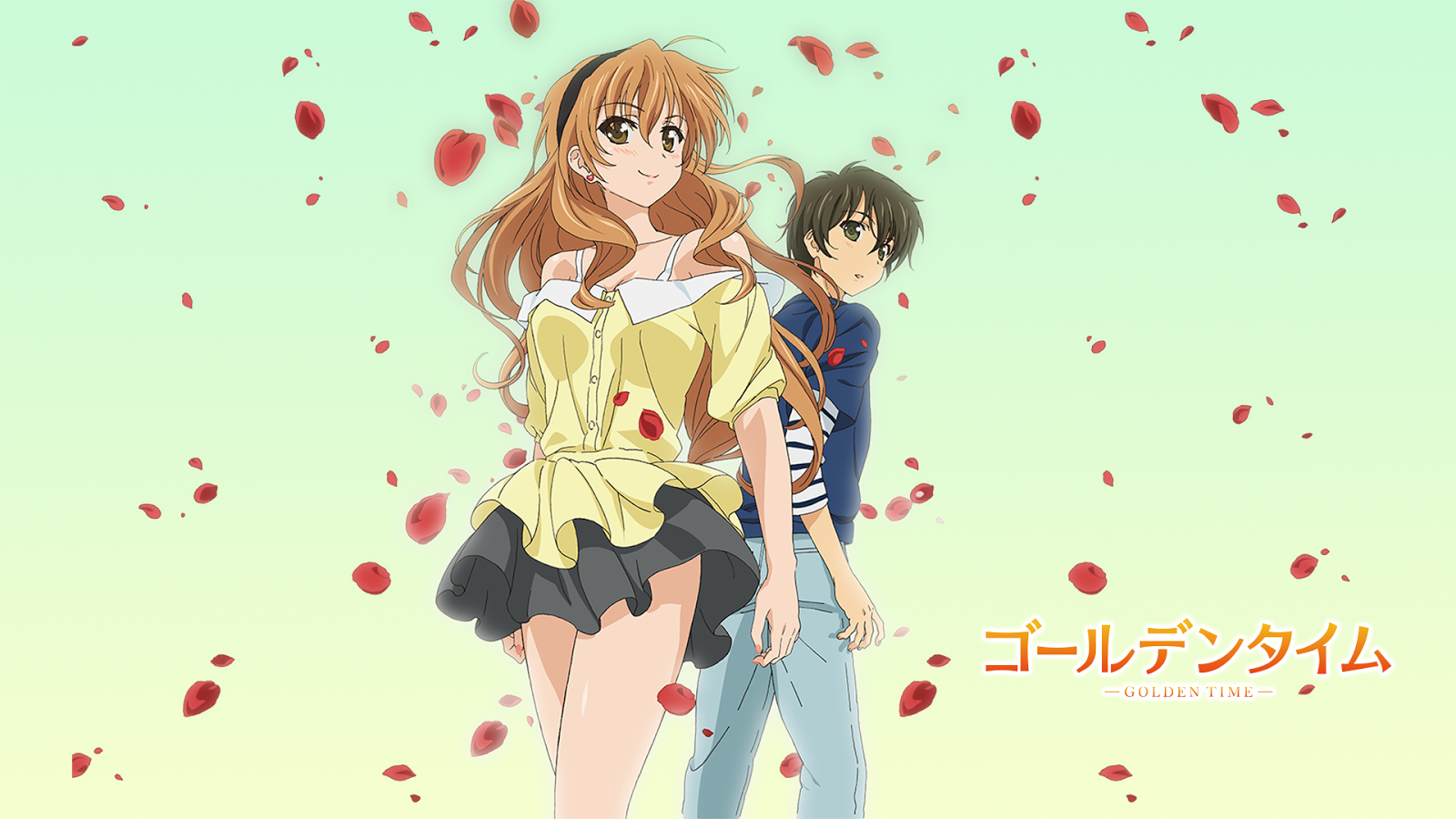
Golden Time- For all intents and purposes, Golden Time should have fallen flat on its unimaginative face. Set at a Tokyo college, a boy is starting to get a new handle on life after an amnesia causing event. There he meets some prototypical anime characters who just barely have an edge of individuality about them. It’s a rom-com which moves away from the high-school setting in appearance, but not in spirit. Yet still I rather enjoy it because Golden Time embraces its nature while managing to avoid too many predictable plots or missteps.

The theme which courses through the veins is self-identity. What truly makes a person? Is it the moments which has led up to their current self, or where they’re attempting to reach? Banri, our protagonist, consistently struggles with this idea as his memories of his past self slowly seep forward, much to the detriment of his current life. As someone currently in college, I perfectly understand the sentiment. I want to move forward, but to do so I have to deal with the effects of my past and continue to grow.

Of course I don’t have an apparition holding me back. Yeah, not the most graceful introduction, but old Banri’s ghost acts more as a visible conscious to no one but the audience. This does however change to some degree later on, but that verges on spoiler territory. It’s forced and the creators should have dropped the idea but were probably encouraged to remain faithful to the light novels. Which is a shame because it’s the one glaring flaw which becomes blindingly stupid at times.

There’s a fair few tropes, such as 2D-Kun and a childhood friend who just so happens to be a cute girl, but for the most part, the singular complexity holds it all together well enough to warrant a viewing.


Sunday, March 30, 2014

I Watch Things Too: Horror On the Small Screen

Season 1.jpg
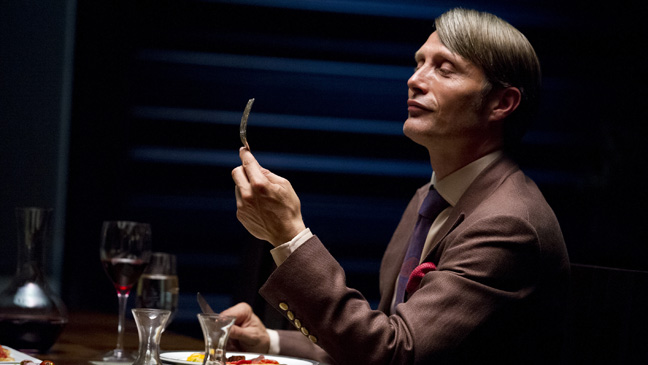
Hannibal- Lately there’s been a pique of interest in shows derived from from the big screen. Two of the most notable ones being The Bates Motel and Hannibal. Now it’s been some years since I’ve seen any of the Lectar related films, but Hannibal has always held a fascination for me. Part of it comes from my younger years of hearing about how horrific Silence of the Lambs is, and as any kid does, I rushed to find a way to watch such a “taboo” movie. The other factor which drew an older Jamison in was the psychology. CBS’ Hannibal plays up both surprisingly well.


While some of the gore exists for shock value, I’m still impressed by CBS for not shying away from the intimate brutality. Gruesome crime scenes don’t get me nearly as squeamish as seeing a human being living their daily life prior to a hard cut to Hannibal doing some cooking. The thought of what his prep work entails is far more unsettling than mutilated corpses constantly being shoved in the viewer’s face. And that’s the biggest issue. Sometimes it tries too hard to appeal to the mainstream with procedural episodes and shock value killings. Fortunately, much of that is absent by episode six and the remainder of the season is spent basking in psychological horror.


Despite what you may think, the centerpoint isn’t Hannibal, it’s FBI Special Agent Will Graham and his mental instability. Graham possesses what is known as pure empathy and because of it he is able to put himself in the mind of a killer, making the already unstable mind lose a grip on reality. His job, mixed with Hannibal’s manipulation under the guise of being Will’s psychologist, forces Will to be conflicted over what is and isn’t reality.


When not struggling to balance on the fence between procedural crime-drama and psychological horror, Hannibal leans towards the latter and is all the better for it.


Log Horizon.jpg

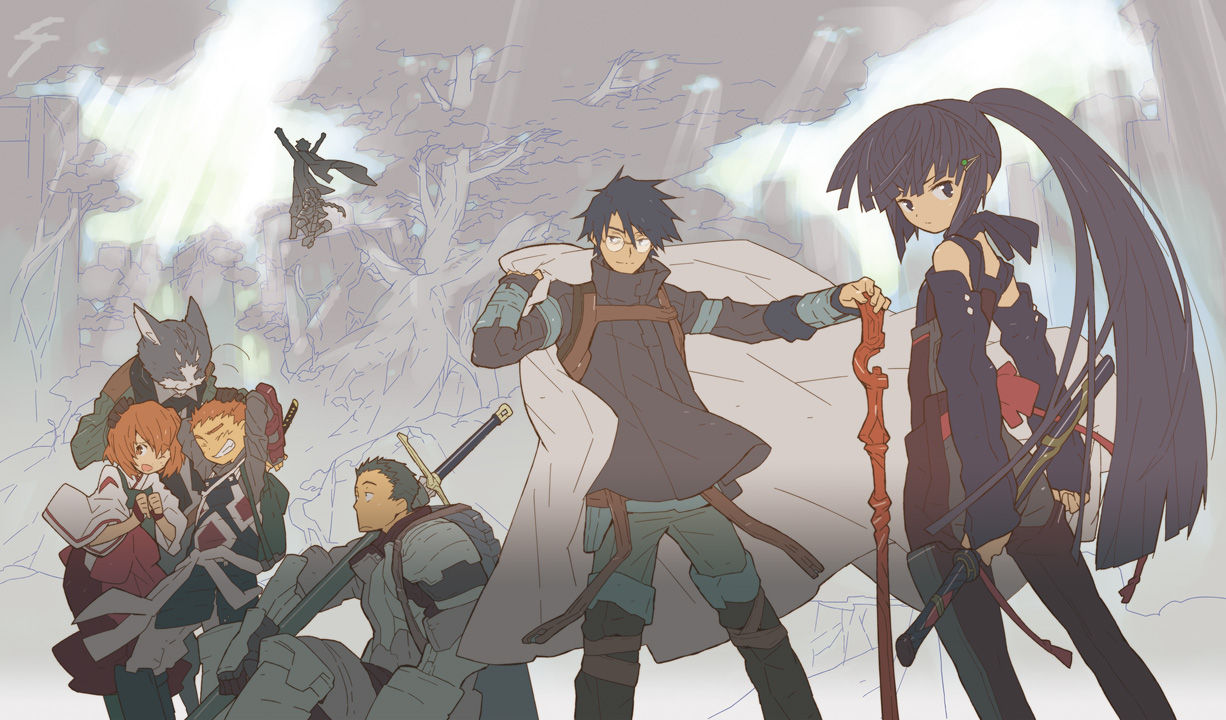
Log Horizon- It’s no secret video games and anime posses an overlapping fanbase. Log Horizon focuses on a group of MMORPG players caught inside a game for an unknown reason. A similar premise to Sword Art Online, but actually handled with a degree of storytelling prowess.That’s not to say Log Horizon is great, because there are numerous flaws, but it is enjoyable nonetheless. Even as non-fan of the MMORPG genre, the intricate systems and subsequent world-building are thoroughly enjoyable. Watching is like diving into a mechanically deep video game.


Protagonist Shiroe's mastery of his world makes for a compelling near anti-hero. I say “near” because while the introspective into online games is compelling, the tone never becomes appropriately grim, which both hurts and helps. You’d rightfully expect the trapped gamers to be desperately trying to find a way back to reality; this isn’t the case. It’s mentioned, but a fourth of the way through the issue is mostly forgotten and there’s an air of content with making the world of Elder Tale their new home. Possibly, this is an intentional commentary on how easily people get sucked into virtual worlds more distressing than our own, but I suspect the opposite. The handling of game mechanics is smart, but Log Horizon is not giving any sort of social commentary.


The light-hearted happenings of the typical anime variety are entertaining. Akatsuki’s beating of Noatsugu after he makes some lewd remark, or how every bespectacled character manages to sinisterly push-up their glasses every episode provides plenty of comedic relief.


Upon death everyone but the NPCs respawn with zero known ramifications which removes the ever-important tension. Roughly half-way through this is resolved in a creative fashion of introducing conflict without having to rely on the biggest drama of all. I can appreciate a show managing to inject turmoil without having to rely on death or relationships too heavily.


Season one is finished, and season two has already been confirmed for this fall, so now would be the ideal time of getting into the series. It’s a little slow moving but the amount of knowledge about the subject matter and how it’s infused into the form of a anime is impressive.


Nisekoi.PNG

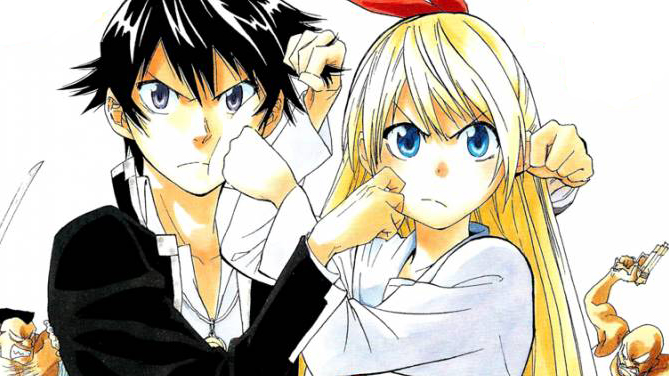
Nisekoi- You know I’m not opposed to the cliched high school setting, but you’ve got to draw the line somewhere. There’s an interesting premise in the depths of Nisekoi’s school-hood schluck. Two teens who are the offspring of opposing Yakuza families are forced into a fake relationship to keep the peace. It’s essentially Romeo and Juliet, but in reverse. HOWEVER- and that’s a big however, shamelessly bathing in every single trope, cliche, and fanservice nonsense under the sun is unforgivable.


It didn’t start too obnoxiously. Watching the Yakuza's kooky attempts to expose the false love or pamper Raku and Chitoge in uncomfortable ways serve its purpose. Quickly, each ounce of uniqueness evaporates and what remains is bland regurgitation of the worst of what the anime industry has had to offer in recent years.


What does Nisekoi in is episode nine. Hot baths and teenage boys trying to spy on the girls is nothing new. Not terrible on its own but when paired with every other anime stereotype such as tsunderes, crushes falling over each other, and androgynous characters being confused for the opposite sex; it becomes head-bashing tiresome. If there was more to it than being a straightforward harem, then I could forgive Nisekoi.


But there isn’t; so I wont.


Vash.jpg

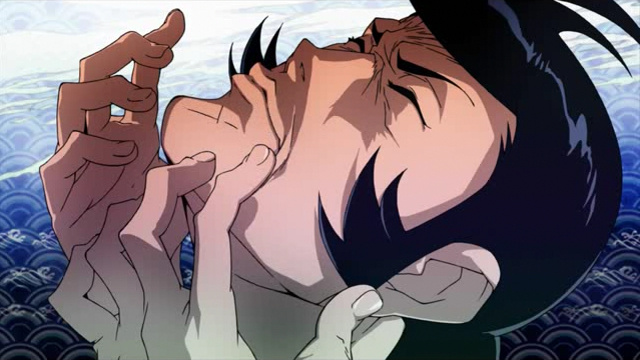
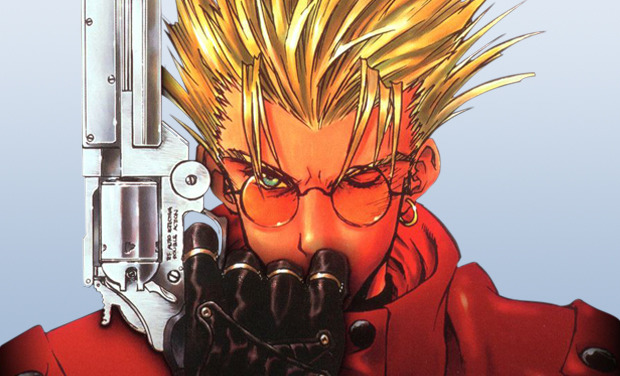
Trigun- What’s the best show I discuss this time? Trigun...easily.


A year or so ago I gave it a shot and the first episode, while not terrible, failed to enamour me like I hoped. This was the famed Trigun after all, an anime oft mentioned in top 10 lists all over the interwebs. One distraction led to another and I only just recently jumped back in. Turns out, I was kind of an idiot for not sticking with it.


Through the first eight or so episodes the goofiness greatly outweighs the meaty aspects, which cleverly reflects the character of Vash through meta-narrative. What initially appears to be a bothcer-led romp of episodic space-western goodness, reveals itself to be much more. Death and destruction follow the infamous outlaw, Vash the Stampede, wherever he goes. Curiously enough, he’s never directly responsible, as he prides himself on being able to get out of any situation without taking life. Even so, he’s always bearing the brunt of the blame, which is why two insurance agents have been sent to record his escapades.


Trigun, much like the other revered anime of 1998, enigmatically reveals its complexities the further you dive in. If its characters tell us anything, what you see isn’t always what you get. Milly’s brutish appearance, Meryl’s seemed bossy attitude, Wolfwood’s- my favorite- reflection of Vash in priest form, and of course Vash’s struggle to accept his past and how his power affects those around him, meshes together to create some of the most well written anime. From 13 and on, each subsequent episode ramps up the tension and weight of every fight as the final confrontation draws nearer.

I can comfortably claim the second half is among my favorite arcs on television. If only the conclusion was as satisfying as what led to it. The writers certainly took it in the ideal direction, but a single episode to wrap-up wasn’t enough. It’s a solid ending, but I was expecting Trigun to go out with more of a bang.


Barring some production value issues, and an ending hastily done, I can’t suggest Trigun enough. Much of it’s tones and themes are steeped in spoilers, so how about you go watch it for yourself.


Bates Motel.jpg

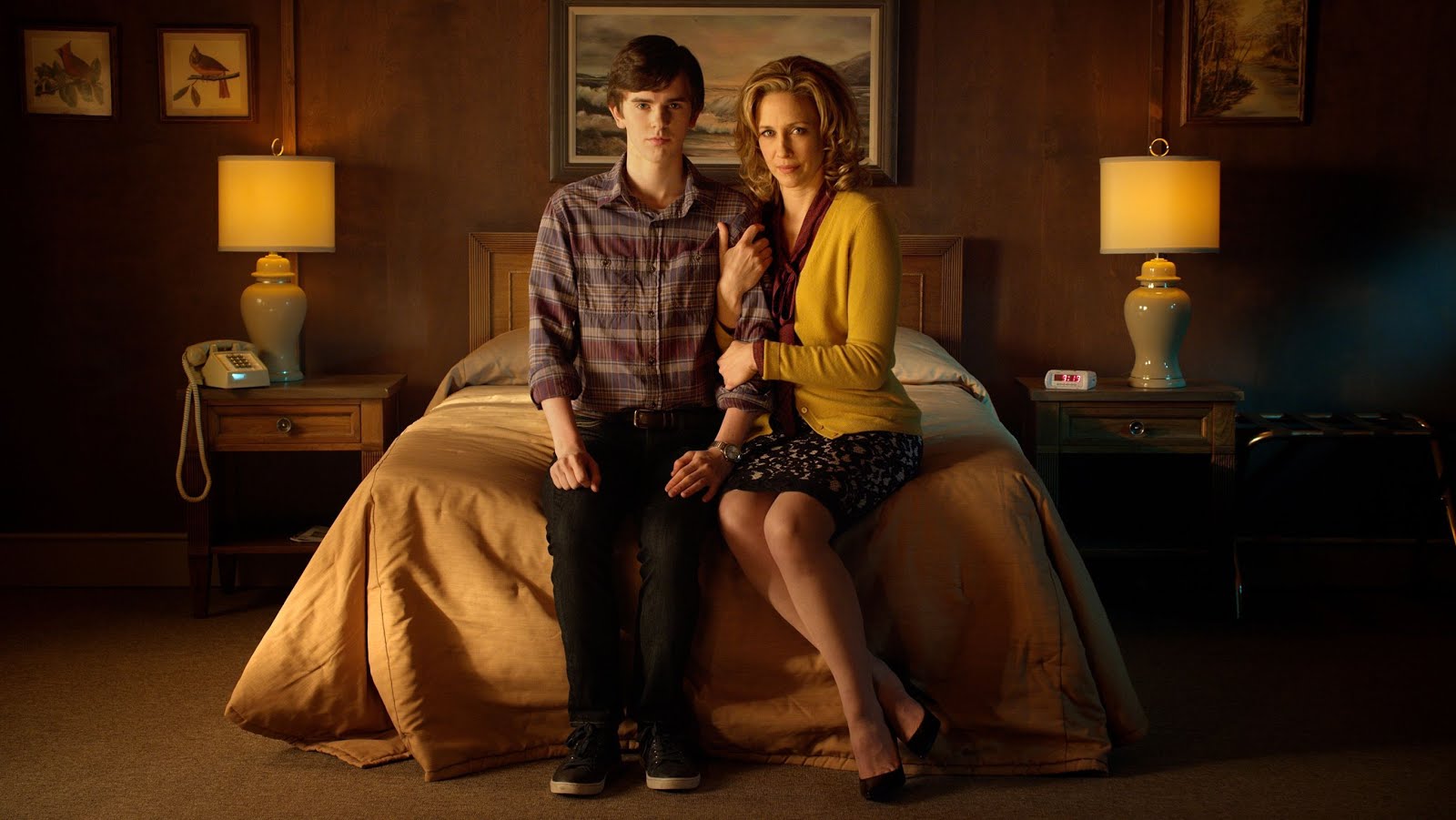
Bates Motel- Yes, like Hannibal this a contemporary prequel to an enormously popular horror film. Unlike Hannibal, Bates Motel meanders with no clear purpose.


The first episode -this is a spoiler and I don’t care- displays a lack of tact. Eschewing any sort of tension, Norman helps his mother cover up the murder of the former motel owner. The idea of a prequel is to see the a transition from what was, to what we already know. What could be an interesting character development of Norman progressing from semi-average teenager to the mother’s-boy-murder he is in Psycho, doesn’t exist. Instead we have an elongated version of the film, but without all the talent of Alfred Hitchcock behind it.


This isn’t the kiss of death though. Hannibal Lecter is- for the most part- already Hannibal as we know him at the start of his show.  Adding piss to the wounds though, Bates Motel takes a Twin Peaks approach. But again, without the talent of someone equivalent to David Lynch, it ends up coming off as a soap-opera. Every single character- and I mean every single character- has some sort of tie to the shady side of Generically Named Oregon Setting. It’s a small town, big secrets sort of thing but fails to be anything more than nonsensical. A hidden pot farm in the mountains, you say? Why wouldn’t there be? And why shouldn’t the cops be trafficking sex slaves? It’s drama for sheer sake of it.

There are fleeting moments where Bates Motel dares to be slightly above average, particularly when Norman is trying to fit in at high school, but for every minute of quality there’s 44 of so-so to utter bullshit.