Showing posts with label Steins;Gate. Show all posts

Friday, January 24, 2014

I Watch Things Too: 2013 Leftovers


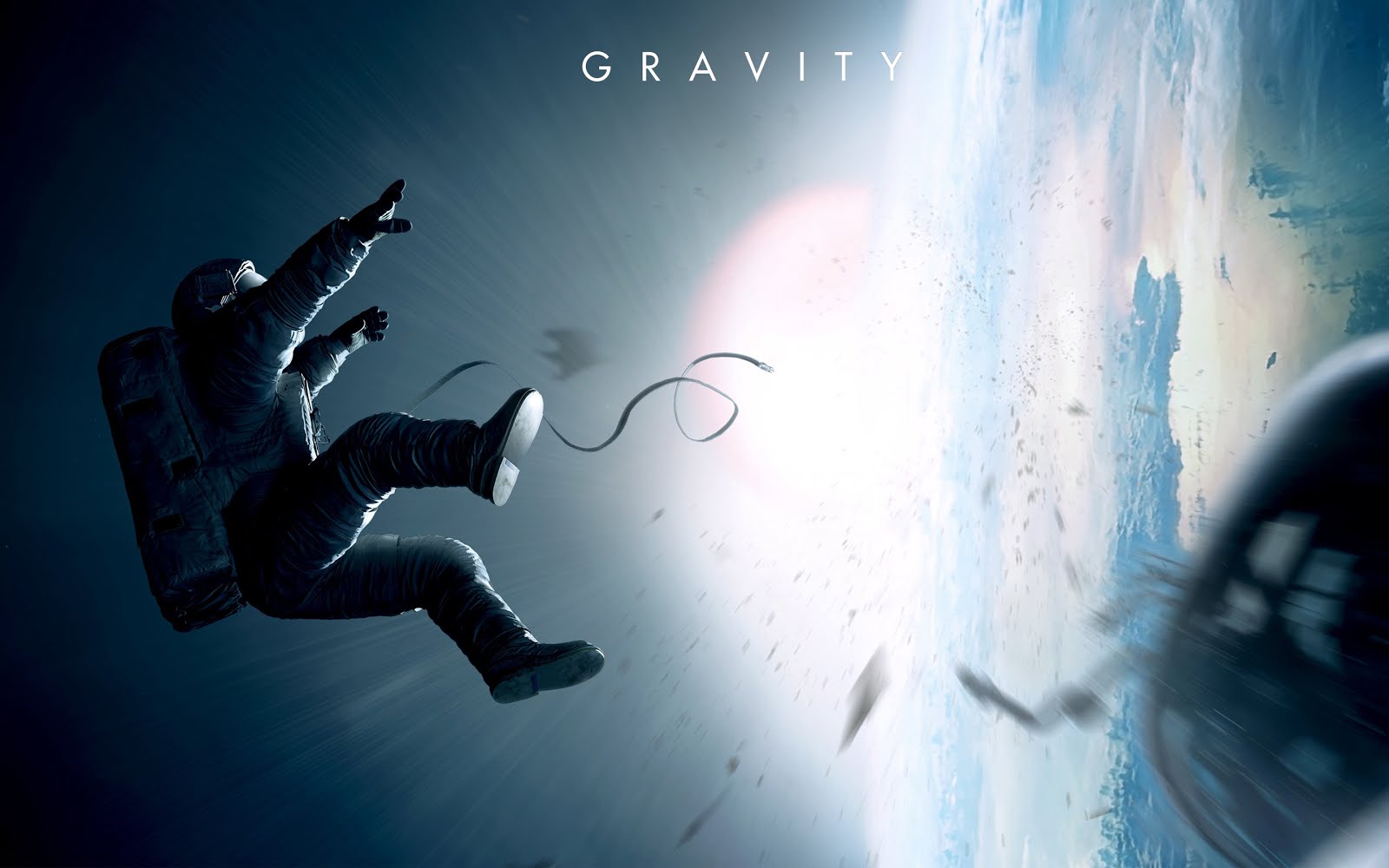
Gravity- Admission time. I enjoy Gravity. It’s practically 90 minutes straight of intense spacey action. The cinematography is stunning, and so is the soundtrack. However, many praised its character development but I’m inclined to disagree. Religion is a major underlying theme. Much of the imagery and semi-subtle symbolism- is of a religious foundation. I’m not exactly a man of faith, but I’m also not opposed to it influencing my entertainment. Journey is one of my favorite games after all. But with Gravity, it takes more of a Book of Eli approach. When “God” plays a role in the direction of the plot, the ending is a forgone conclusion.

Barring the religious tones, Gravity is such a blast because of unconventionalism. The cast is tiny and lead by George Clooney and Sandra Bullock. Despite her sometimes hammy acting, the character of Ryan Stone, an inexperienced medical engineer in space, makes the frantic action even more enjoyable. Flying around with shrapnel whizzing by while attempting to chaotically fling from one station to another is sure to throw a few pacemakers out of whack.

As I previously mentioned, director Alfonso Cuaron’s trademark cinematography is hard at work with some great special effects culminating in one of the best looking films of 2013. Much of symbolism, such as Bullock swinging around, struggling to get unattached from an umbilical cord-like structure, works because of how each scene is shot.

Gravity is a film which attempts to succeed on both a shallow and cerebral level.  If not for some cheesiness hampering the more poignant scenes, it would have been on my top 5 films of 2013 list.
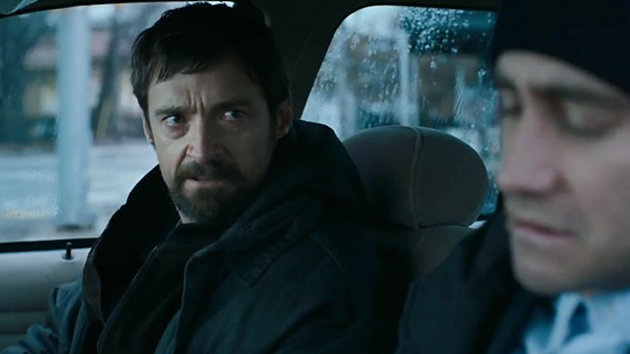


Prisoners- Crime dramas often live and die on their twists. Prisoners nears life support because of its. Don’t get me wrong, it’s not a bad movie. There’s a solid chunk of quality to speak of but its almost completely undermined by a predictable narrative.

While not a stooge, err...I mean parent, I can imagine a missing child is a situation words can appropriately describe. Prisoners poses the question of “how far far is too far?” Hugh Jackman’s character is the centerpiece of that very such thing as he brutally tortures a suspect the police had to let go. Within these moments Prisoners is at its best. Jackman executes the frustration, anger, and fear of Keller Dover better than you’d expect. While I wasn’t made uncomfortable per se, the weight of each scene is tangible. If not for the moody cinematography and solid performances, this likely would have fallen flat though.

And that’s about all the praise I can muster. Within the first 20 minutes I had two of the three key portions of the twist figured out. Stringing clues along is a fine tool, but when there are only clues which make more and more sense as the film progresses, the payoff is nonexistent. The kicker is the final scene which works to undermine the overarching message with an unnecessary last-second self-indulgent reference.

I enjoy crime-dramas, despite how inundated western entertainment is with them. Prisoners forgets the key to any good work of the genre though and implodes before much satisfaction can be gained.
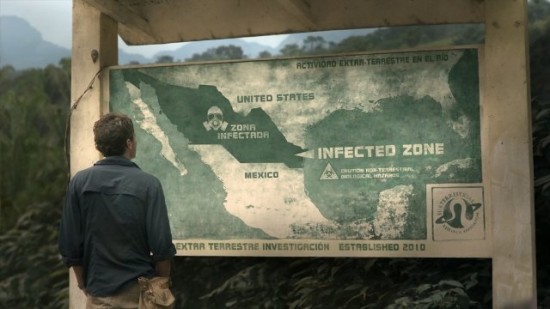


Monsters- Don’t let the bland name fool you, Monsters is a kaiju film of considerable caliber. It’s not so much about unstoppable creatures eradicating humanity, as it is about humanity learning to adapt. The best way to describe it, is imagining and artsy Jaws. The creatures are limited. They’ve been confined to the the area pictured above, and they aren’t fully revealed until the very end. They become a mixture of a backdrop and the conflict. It’s odd thing to conceive, but it works out wonderfully.

Conversely, there is an unhealthy focus on the love story between the two leads. All too often takes up valuable time which could be spent on the rather unique setting. It’s not film ruining, but it’s not entirely worthwhile either.

The big takeaway from Monsters is that director Gareth Edwards is probably one of the better choices as director for the upcoming Godzilla, which looks incredible.


The Iceman- Anti-heroes, especially of the murderous variety, can be a tough sell. They often become either too humanized, Dexter, or incredibly uninteresting. In Iceman’s case, it’s the latter of the two. Based on the real killer, Richard Kuklinski, who claimed to have murdered over 100 people for both pleasure and mob related work, you know where this one is going from the get-go. So it’s one of those journey rather than destination stories.

Thanks to the mundane level of suspense, the intentions of a compelling character analysis never come to fruition. Michael Shannon plays his familiar stoic creeper role and does a fine job of it. The cast in general is rather surprising. There’s James Franco for a couple seconds, which I’m sure costed more than it was worth. Then there’s Chris Evans who’s out of depth as killer Robert Proge. Yes, Captain America plays a serial killer and isn’t terrible at it, but everytime he’s on screen there’s an overwhelming dissonance.

The Iceman is the type of movie you watch and then an hour later it escapes the jail of your long term memory. If you’re interested in the learning about Kuklinski, you’d likely get more of a thrill reading the Wikipedia article.


Steins;Gate: Fuka Ryoiki no Deja vu- As a devout fan of the anime, it should come as no surprise I enjoy Fuka Ryoiki no Deja vu. The truth is, Fuka Ryo...fuck that name is long, isn’t necessary. It’s an excuse to make more Steins;Gate. Call me crazy, but I’m 100% okay with that. While the series finishes strong, I missed hearing Tu tu ru, Okabe and Kurisu’s bickering, and all other manner of goofiness which makes the characters so lovable. Fuka Ryojdsaf djfsdj scratches that itch.

Taking place after the events of the anime, Kurisu and Okabe experience some role reversal. This twist creates for a satisfying dynamic between the two, if entirely predictable in its execution. Chances are you can predict the ending, which is sort of bummer, but Fuckaj Ryo Something or Other’s focus is strictly on the journey. While not as impactful as the anime, there’s still plenty of moments which will kick you straight in the feels.

Funnel Cakes’ biggest issue is the length. The central concept would be more fitting of the pacing adorned to several episodes rather than an 90 minute film. There’s a lot of interesting ideas, such as Okabe’s memories between worlds blending, but not a one is examined to its fullest potential.

The key to enjoyment is expectation management. This isn’t nearly as profound as the anime, but for fans looking to satisfy their Steins;Gate fix until the western release of the visual novel, Fuka Ryoiki no Deja vu is worth a look.

Sunday, January 19, 2014

My 5 Favorite Movies of 2013


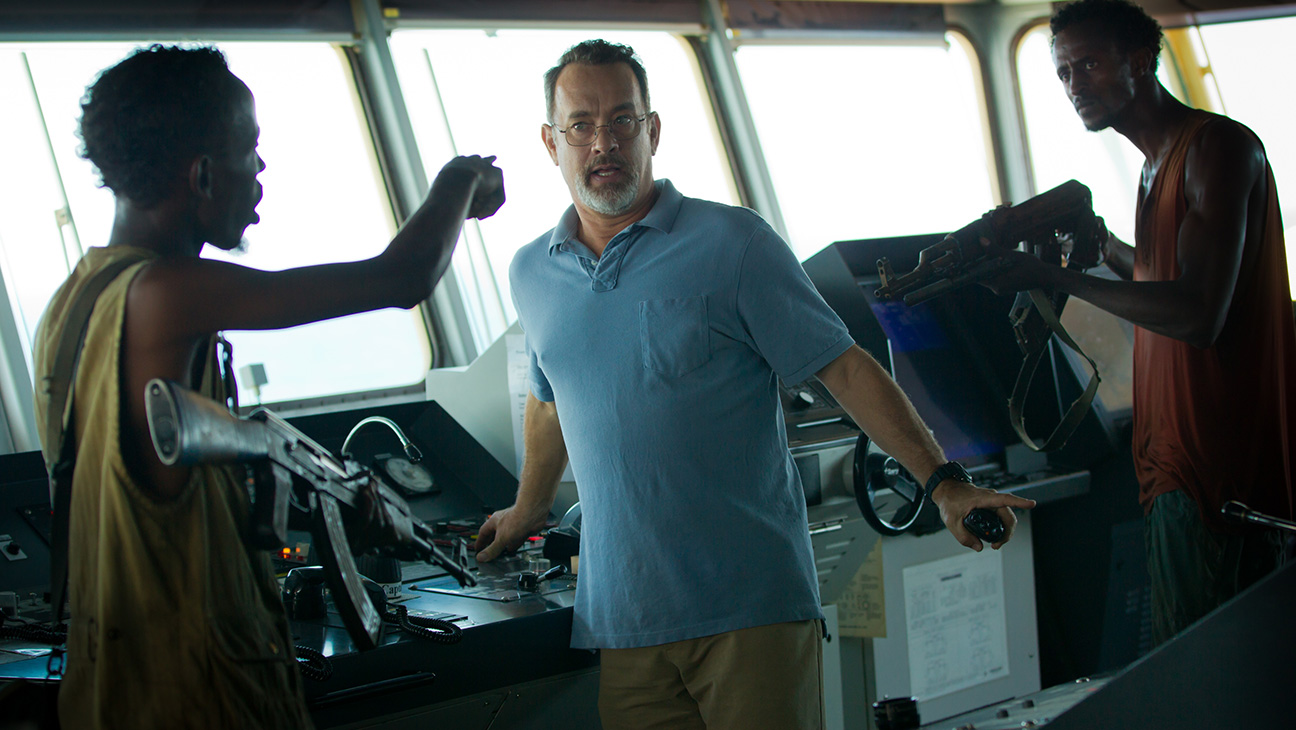
5.Captain Phillips- At first glance one might assume Captain Phillips to be incredibly racist. After all, it’s a film about working class Americans- mostly white- being attacked by underprivileged Somalis. In truth, it weaves a far more sympathetic story towards them than you might expect. Seeing that the four man pirate crew gets more screen time than anyone, other than Captain Phillips, a good portion of the film is spent trying to understand their motives. They didn’t take to the high seas after seeing Johnny Depp prance about in Pirates of the Caribbean. And it’s not even about money for money’s sake.


On the acting front, it’s stellar performances all around. Tom Hanks is unsurprisingly good at lead, but the real star is Barkhad Abdi- the pirate leader- Muse. Despite the lack of any prior acting experience, the Somali native gives one of the most memorable displays in recent memory as the main antagonist.


Even though the ending is rather clear from the get-go, it’s the intensity of every moment which matters. There’s rarely a second to breath as the cat and mouse game between the container ship crew and the pirates unfolds.


I love entertainment which challenges our preconceptions. It’s easy to say Somali pirates are all terrible people. Captain Phillips has no notion to disagree with the idea of what they're doing is wrong. However, these situations are never clear cut and it’s important to understand the true motives behind any action.


While a thriller at heart, there’s certainly not a lack of purpose.


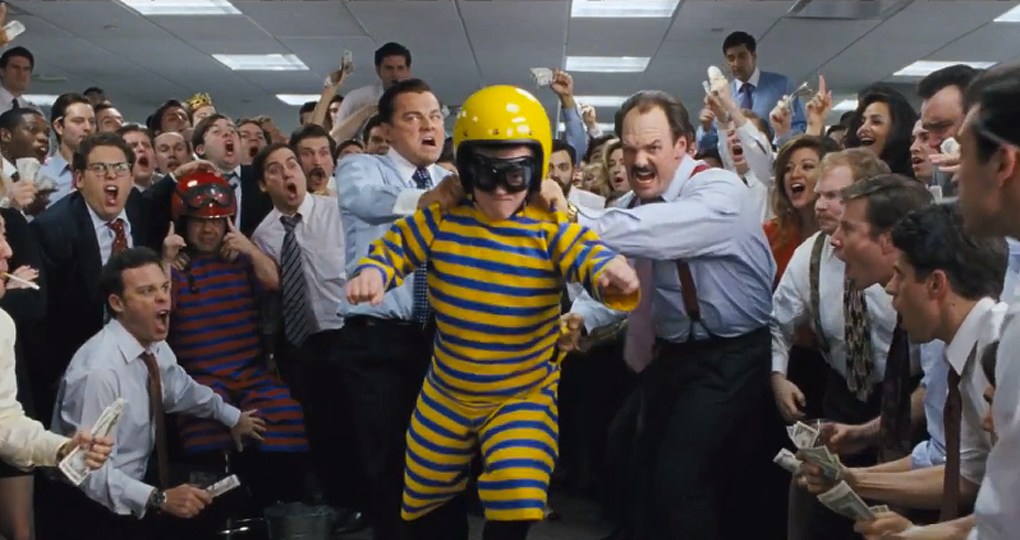
4.The Wolf of Wall Street- Over the top is an apt descriptor of Martin Scorsese’s dramedy on corrupt stockbroker, Jordan Belfort. The lavish lifestyle led by DiCaprio and crew is both a tempting fantasy and an abhorrent abuse of power. It’s a cautionary tale against Wall Street. Beneficial isn’t out of the question, but it can and will undoubtedly be taken advantage of by those in power. We aren’t meant to understand the how, but to fear the who.


As I mentioned in my I Watch Things Too piece, that’s a rather poignant message.


There are more than a few surprises to speak of too. Not in the sense of big twists, but firstly within the comedy. These aren’t the type of laughs you’ll find in your standard comedy. It’s more about the taking in of the outrageously perverse and laughing it off. Average Joe, the audience, is looking in on the 1% in disbelief, but cracking up the whole way.


The second surprise is Jonah Hill. Moneyball saw his rise to the serious role but as Belfort’s best friend, Donnie Azof, he’s able to combine a new style of comedy to his repertoire and some serious acting chops. Whenever he and DiCaprio are on screen there’s a synergy which makes the very lengthy film feel entirely worthwhile.


Not every scene is needed, but few get in the way of the viewer’s enjoyment. While the big screen may not be ideal, especially if your theater is as bad as mine, I’m not sure there is a more widely encompassing and accessible piece of Oscar-bait this year.


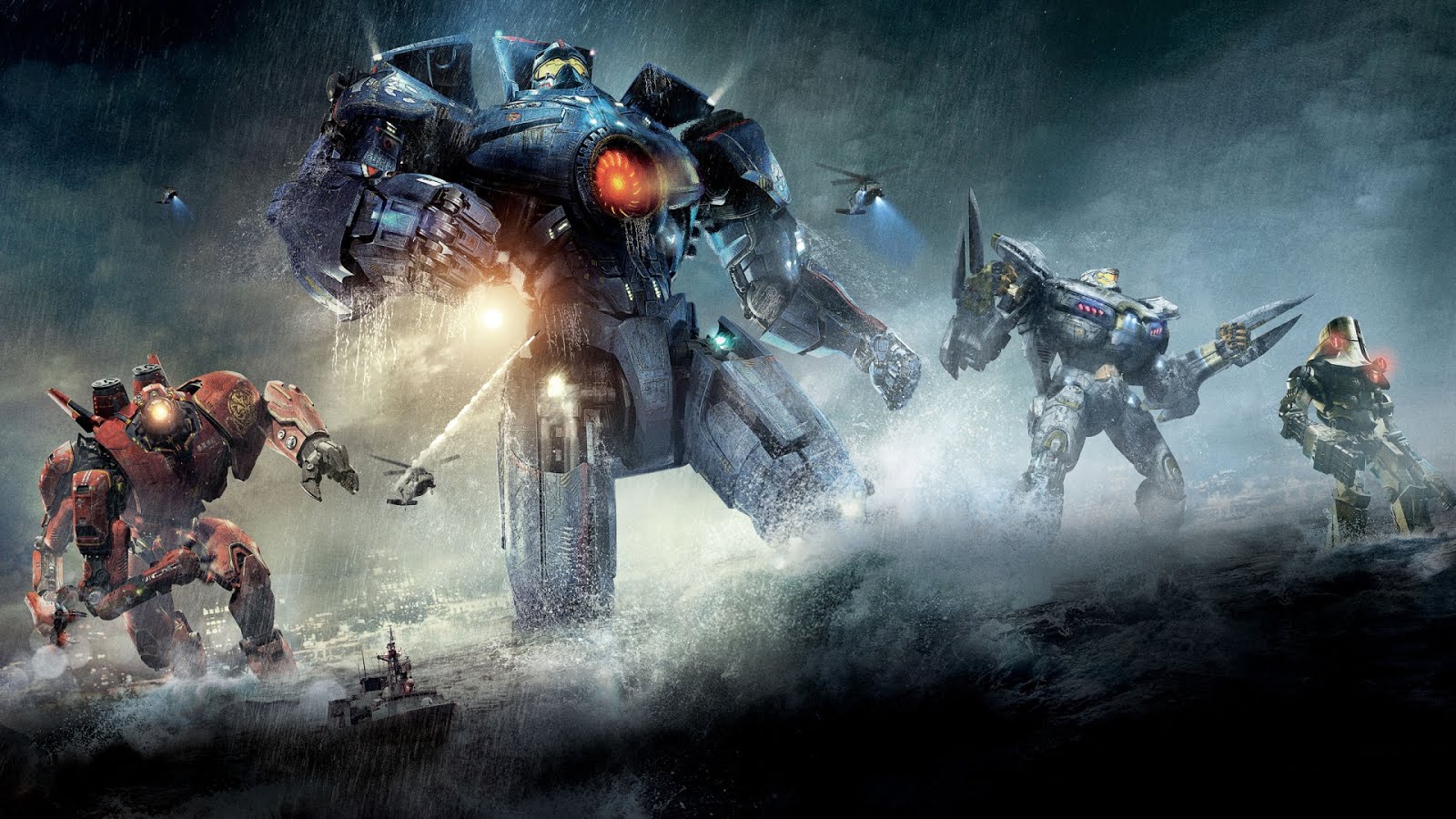
3. Pacific Rim- This is probably the most surprising of the bunch. While every other film on this list was Oscar-bait from the day it was born, Pacific Rim is the complete opposite and I love every minute. It’s the unfortunate summer-blockbuster that never got the mainstream attention it deserved.


Director Guillermo del Toro is known for his creativity, see Pan’s Labyrinth, and despite Pacific Rim’s clear inspirations, there’s an undeniably unique style. It’s bombastic skyscraper sized robot action, but not completely mindless like Transformers. It’s mechs versus kaiju, but not Evangelion. It’s something both familiar and new.


While you’ll come and stay for superbly captured action, there’s some incredible world-building at work. From how the mechs are piloted by two humans forming a literal mental bond, to the Ron Perlman ran black market selling kaiju remains, it’s an atypical summer smash.


The occasional machismo may initially turn some off, though I feel it’s rather fitting, but again Pacific Rim remakes the mold. Opposite -and equal- to Charlie Hunnam is Rinko Kikuchi who’s Mako Mori becomes the most intriguing character of all.


Pacific Rim may not be making an appearance at the Oscars, though the visual effects outclassed several of the nominees, but don’t discredited it. It set out to bring the best of so many worlds to Hollywood and it did so with exceptional results.


2. 12 Years a Slave- Slavery in America is no stranger to Hollywood or entertainment in general, so it can be rather difficult to tread old ground with fresh eyes. Considering 12 Years a Slave is on this list, it’s safe to assume director Steve McQueen found a way.


To some extent, the basic structure of film making is bypassed in the interest of storytelling. There’s no standard formula strictly adhered to. No, 12 Years a Slave wants to tell you the true story of Solomon Northup, a freeman kidnapped and sold into slavery. It’s strange to have a lack of concise direction yet still be 100% engaging. There’s not much build-up. It’s a series of events getting by on being so incredibly well done on every front that you don’t really care where it’s going, you just want to be there for whatever happens next. Many scenes are lengthy and more than a few shots are held for an extensive period. In this, the moments most integral are captured with crippling efficiency.  


Through music fitting of Saw- and distinguished cinematography- the more horrific scenes become iconic. Every one of Solomon’s emotions resonate like the bite of a great white shark. Mentally draining doesn't even begin to describe it.


At no point in did I sit and say “well that could have been handled a lot better.” Which- trust me- is extremely rare. Of course there are flaws, like some hushed or easily misconstrued dialogue, but when measured up to the all-around excellence they shrivel up and die. 12 Years a Slave can be brutal but my, oh my is it worth every bit of pain.


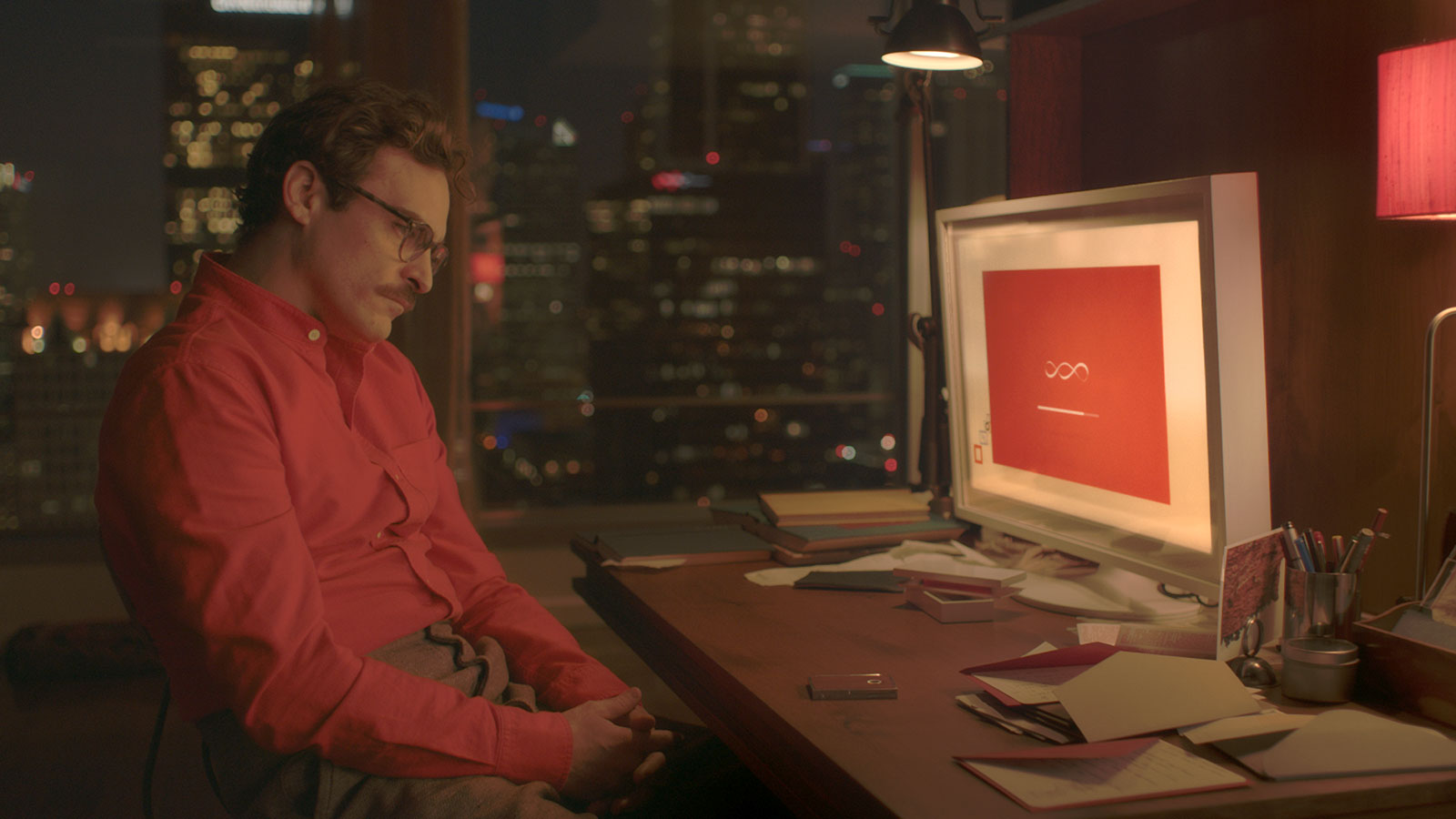
1. Her- Nothing on this list is more timely and creative than Her: the story of a man who falls in love with an A.I. Yes, anime fans; we may be familiar with A.I. relationships, but American cinema isn’t.


Acceptance is often at the forefront. Despite being an even more tech-happy culture, Her’s near future setting isn’t so alien that the idea of a relationship between a human and a “computer” isn’t taboo. Though initially the world-building doesn't support that clearly enough; one of the few flaws. Theodore’s, the protagonist, confliction and how it gives way to arguments between him and his A.I. girlfriend, Sam, is much more of an internal strife of morals and societal values. Heavy-handed struggles aren’t slapping you around. There’s a message, it’s conveyed, and that’s, that.


In fact, most aspects swear the oath of subtly. Visually L.A. isn’t strikingly different, but nevertheless its one setting you’ll surely be enamored with. It isn’t far-fetched, but at the same time it’s just enough more technologically advanced than we are that you get that “when do we get flying cars,” feeling.


What sets Her apart from the rest is individuality. From the plot, characters, and all the way to its presentation, there’s an air of something much of the western audience may be familiar with. Her is a romance through-and-through, but not in cheesy and overdone way. It’s genuine, meaningful, and timely. For that, it deserves to be my favorite movie of 2013.


Honorable Mentions


Steins;Gate: Fuka Ryoiki no Deja vu- An epilogue of sorts to the stellar anime, Steins;Gate. The ending is no shocker and it’s too short, but the journey is such an impassioned and satisfying experience for fans of the anime.


Gravity- An intense sci-fi thrill ride from start to finish. However you may feel about Sandra Bullock is inconsequential, this film is another top-notch production from Alfonso Cuaron.

The Wind Rises- I admit, I haven’t actually seen this one: much to my displeasure. It’s Hayao Miyazaki though, the king of anime movies and one of the best directors we’ve ever seen. It has to be good.

Monday, January 6, 2014

I Watch Things Too: Welcome to the NHK

Welcome to the NHK- I was originally going to include this in the next edition, but NHK is far too important to me. Where discussion fails me, writing is my means of expression. An outlet by which the true Jamison Miller can connect to the world he occasionally feels alien in.


So please, read this with an open mind.


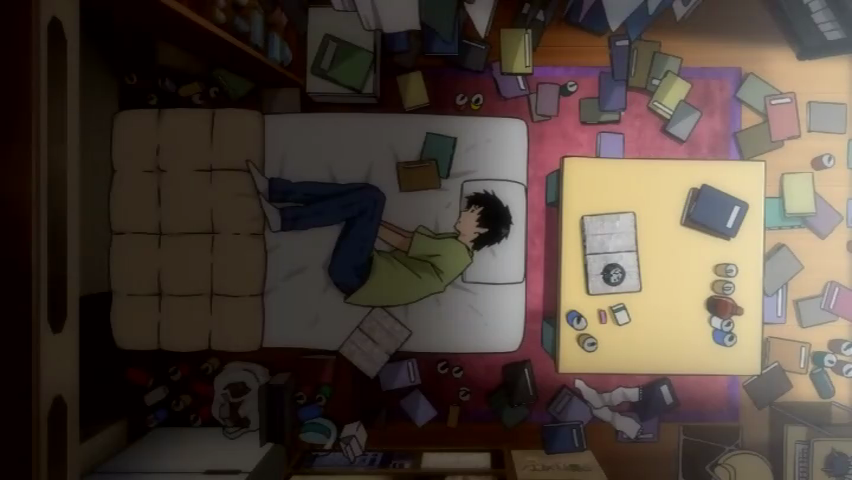
NHK is the anime rendition of Catcher in the Rye, a favorite of mine, for the modern day. As a 22 year-old hikikomori, Sato struggles with the purpose of his life. He moved away from home four years ago in order to attend college in Tokyo, but quickly dropped out in his first year and settled into a solitary lifestyle.


While stumbling in the last few episodes, holistically NHK is arguably my favorite piece of entertainment. That includes movies, shows, books, and even my biggest passion: video games. For me, Sato is the most relatable character I’ve ever encountered. The empty feeling of being a young adult, living on your own, not being all that social, and questioning where life is going to take you is something I know well. Countless times I’ve sat in my apartment- much like Sato- and questioned all the decisions I’ve made. Why do I dive deeper into debt for the sake of a college degree with questionable value? Why do I have trouble relating to others? And when the hell can I take the next step and truly define who I am?


Even in an ending proceeded by some weaker episodes, I truly understand the message. Life isn’t about overcoming your deficiencies. It’s about accepting them as apart of yourself and building an existence with the people you care about.


If you would ever like to truly understand me as a human being, then watch NHK. Not only is Sato the exaggerated Japanese version of myself, NHK exemplifies why I write about the things I love. They’re a means by which we can all relate to one another. Through them I’ve grown to understand that being judgmental and close-minded only serves to hinder your enjoyment of life. Views I had once not held have been made apart of my philosophical beliefs.


I feel we all have a piece of entertainment which defines who we are and helps to shape our future selves. Welcome to the NHK is my apogee of storytelling and something I hope you all can experience and learn from. Its character rapport will make you deeply contemplate your own relationships and their merits. There's also a healthy balance of comedic relief. Sato's paranoia often creates for some rather hysterical internal dialogue between himself and the inanimate objects of his apartment which embody his self-conscious.

I rarely rewatch or replay much of anything these days but NHK had me coming back for more the day after I finished.

Much like the cast it's centered around, it's a flawed masterpiece which reflects a subset of society with unadulterated verisimilitude. I love its strengths and I love its flaws; and I hope you'll give yourself a chance to fall in love with them too.

As articulate as I like to pretend I am, the piece linked below is from NHK's soundtrack and does a far better job of explaining what it's all about.


American Horror Story- There are some shows I have a mild interest in but after constant praise I give them a shot. American Horror Story is one of them.


Now I like horror, and despite the obvious problems posed by introducing the genre to television, the miniseries approach of AHS seems like a valid solution, but you wouldn’t know it from watching. My usual rule-of-thumb is to give five or six episodes before sprinting for the escape pod; AHS didn’t even last that long. It took me a whole three episodes before I abandoned this schizophrenic mess.


Episodes rarely settle into any sort of pace or place. They jump back-and-forth between several incoherent stories which range from “where’s the remote” to “hand me the closest heavy object capable of breaking the TV.”


The finishing blow though is the simple fact that AHS fails as a piece of horror. The jump scares are incredibly predictable and there’s a lack of tenseness thanks to undistinguished and sterile cinematography. Yes, there’s an air of campy weirdness, but being strange for the sake of it is hollow.


There’s a bad pun to made about the quality of AHS, but I think you get the point. American Horror Story is atrocious.


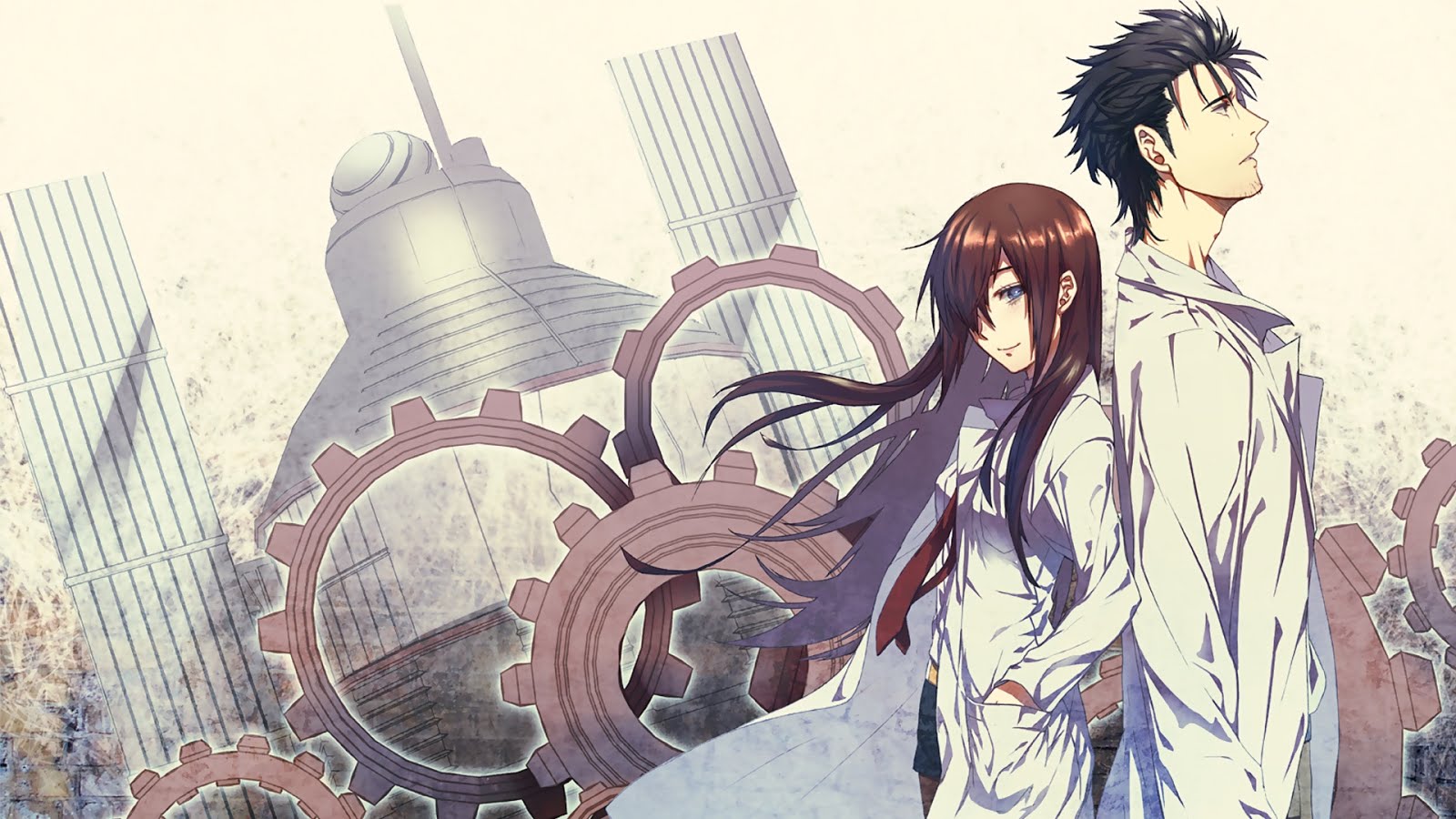
Steins;Gate- I’ve had a long-running fascination with time travel since watching Back to the Future as a kid. While not wholly realistic to the base concepts, BttF cultivated a fascination for the highly complex and paradox riddled subject. Naturally, Steins;Gate drew my interest. When fiction delves into time travel, it can often become convoluted. If plot holes are avoided, what comes out the other end can be an exceptional. Case and point, Steins;Gate.


In many ways the mold is reformed and broken. Okabe, the protagonist, has a female childhood friend, Mayuri, who isn’t all there, but it’s never outright said. Characters react to her in a natural manner. She’s unique but not token. The same could be said of Okabe, or most of others, the self-proclaimed mad scientist. The cast is such a hodgepodge of familiar and new that’s it near impossible not to get caught up in their lives.


While starting off seemingly innocent and light-hearted, things get serious with some heavy moral quandaries about manipulation of past events. I’ll unashamedly admit there was a moment where I actually curled up into a ball as a single tear rolled down my cheek.


Sadly to discuss any further may tempt the spoiler gods, and I wouldn’t want to rob you of the amazing ride. I often predict twists, but Steins;Gate does an exceptional job of pulling the curtains at the most opportune times. Finding a weak episode is a difficult task- and while it’s not my favorite anime- I’m inclined to say it’s the most technically sound.


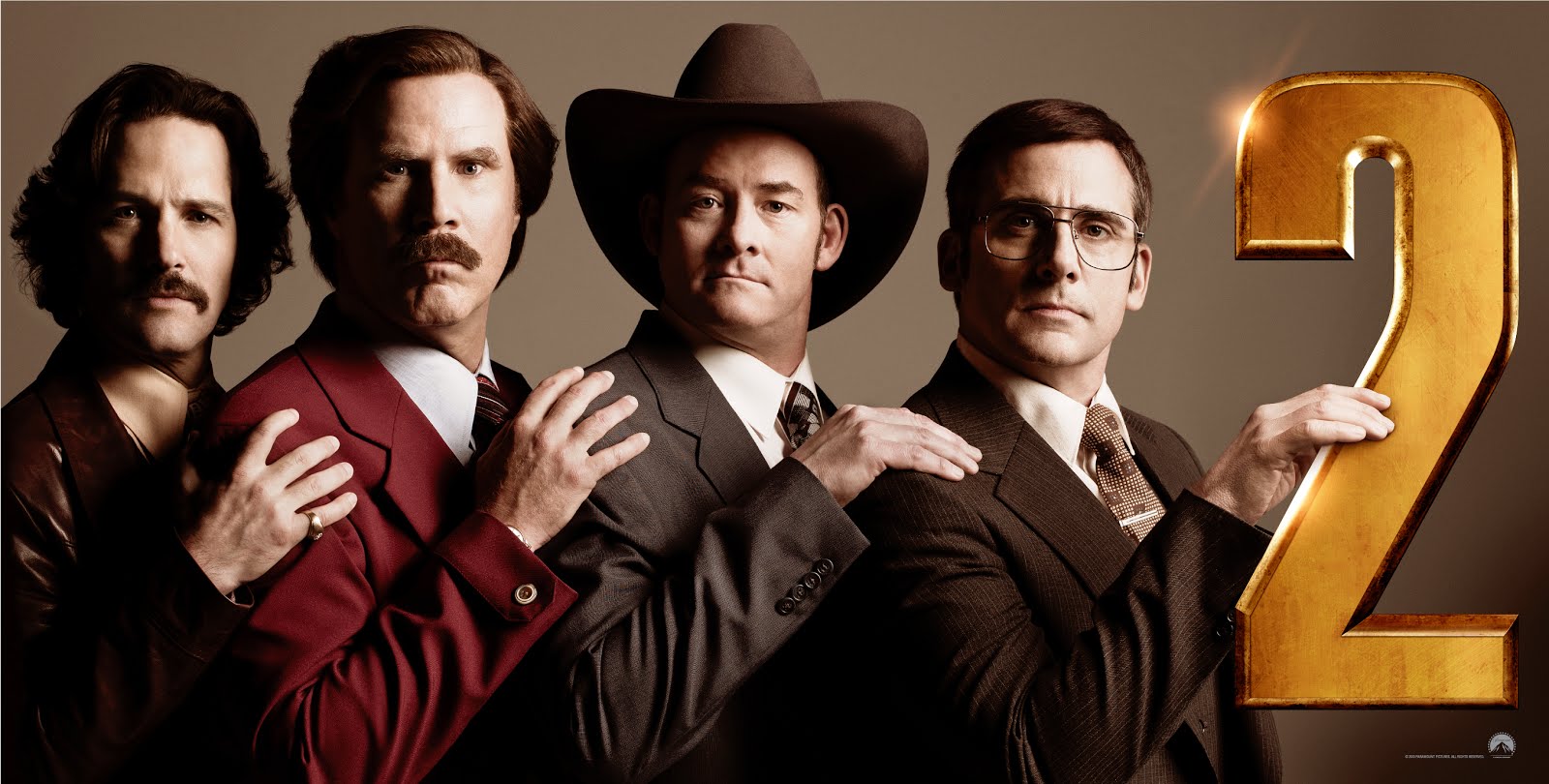
Anchorman 2: The Legend Continues- Firstly, I need to admit I’ve never actually seen the entirety of Anchorman. Partly because I’m not a huge Will Ferrell fan- but what I've seen- I enjoy. Going to see Anchorman 2 in theaters wasn’t my first choice. Comedy sequels tend to miss the mark of their predecessors. Indeed, Anchorman 2 isn’t a barrage of constant big laughs, but I departed satisfied.


The biggest issue I take is in how far the style of comedy is taken at times. It’s stupid. No if, ands, or buts about it: Anchorman 2 is as dumb as it gets. But for the majority of the film, it’s a good dumb. Occasionally jokes miss their marks or drag on for too long. Easy humor is fine, but make sure you delivery it creatively. Change things up. Comedy is all about expectation management. Sometimes this is forgotten.


Mostly, it succeeds. The scene where Ron Burgundy starts getting it on with his black boss and random pictures of famous black people are strewn throughout in a montage style is hilarious. Or in the finale- which I’ll avoid spoiling- but know that it takes the crazy to a whole new level.


Anchorman 2 is a steady trickle of small laughs with the occasional dry spell and the even more rare big laugh. It’s probably better than it deserves to be, especially with an overarching satire of the decline of modern news media, which is out of place. There’s no need to rush out and spend an exorbitant amount of money on tickets, but at the same time, you’ll likely do so anyway thanks to the hype-train.


So heads up. If you enjoyed the first, you’ll likely find your time well spent on the second.


Out There- Undeniably, homosexuality is one of the most hotly debated topics of our age. Which is sort of embarrassing considering we’ve been around for a fair few years. If you consider yourself a decent human being and a responsible citizen, it’s necessary to educate yourself on such important societal issues. One way of doing this is by watching documentaries.


Stephen Fry- British comedian, actor, and activist- decided to take it upon himself to tour the world and visit countries where such a topic is...well, topical.


As a gay man, Fry clearly has his own views on the matter, but Out There does a great job of exposing the utter bullshit the LBGT community has to live with. While part of the world may seem fairly progressive, there are those who are regressing. Ghana and Russia are two big examples shown in detail during this two-parter.


But it’s not all about attacking those in the wrong. The overarching message is clear. Respect, or at the very least tolerance. Even if you don’t fully agree with Fry’s views or approach, the facts presented are real and sobering. The world is not as accepting as it pretends to be.


In summary. If you’re not a brainwashed and close-minded person filled with disdain for people who are not affecting your life negatively, you’ll likely find Out There rather enjoyable and educational.