Showing posts with label The Walking Dead. Show all posts

Monday, April 14, 2014

I Watch Things #19: Winter Round-Up

Season 4.jpg
The Walking Dead- I’ve made my like-hate relationship with The Walking Dead well known in the past. Long stretches of quality episodes always find a way to be completely undermined by one or two really bad ones. The first half of season four made this abundantly clear. A new executive producer subtracted some of the B-movie zombie flick and added more of character-driven narrative, akin to the Telltale game. Even the Governor manages to draw interest, but that soon dies within the final two episodes.
The second half does no favors early. Contradicting “lore” when Michonne uses her dismembered walkers as cover and inane contrivances which see the return of one particular character out of the blue. In typical TWD fashion, it manages to turn-around before too long.
I’ve always said Darryl has the potential to be the best character. He’s the one person who’s actually been made better by the outbreak. Rick and the crew are always trying to keep their humanity while Darryl tires to gain his. Having Beth bring him back from the brink, being around the real morally abhorrent; it displays a side of him the previous three and half seasons gloss over. It’s not just Darryl either, the entire cast is made better by a much more reserved approach. Divided, and facing more personal issues rather than “oh no, bad guys are going to attack our home,” the true weight of an apocalypse sets in.
But guess what. The finale, forgot to be a finale. You could argue the main plot is the group getting back together, but regrouping in a cannibal settlement isn’t exactly a resolution. People are going to die, that’s a given but what we’re left with is a tease. The plot has yet to hit its climax, which is why the finale would have made for a great penultimate for the season.There’s a whole lot of build-up to an obvious twist, and a fade to black.
Somehow, someway every time I say I’ve almost given up on the show it jumps right back. While never great it manages to keep being incredibly accessible with streaks of “this is almost as good as the game.”

Ryoku.jpg

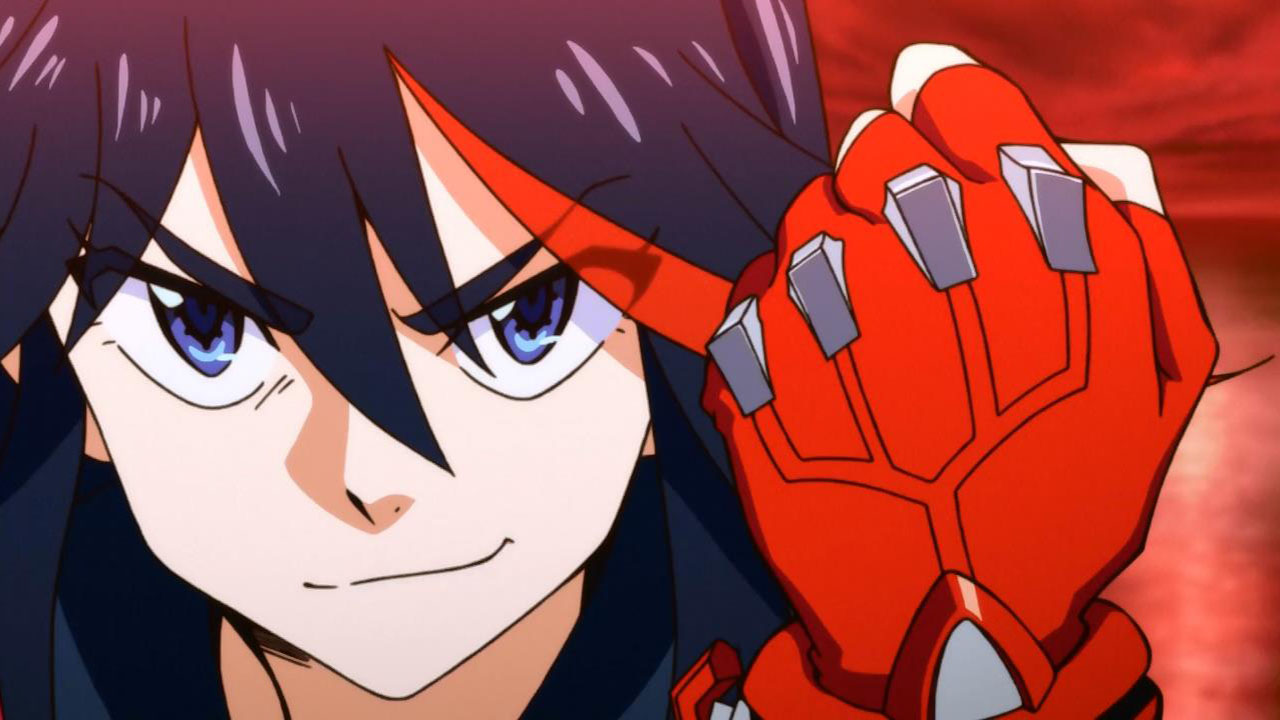
Kill la Kill- I often advocate anime to those unfamiliar with the form. I would love to see a day where my social media is obliterated by anime talk, just like it so often is by Game of Thrones or The Walking Dead. Kill la Kill is the last place someone with reservations about the medium should dive in. I wasn’t sure of it myself when I started. The level of nudity and lewdness is hefty enough to make the biggest of otaku feel uncomfortable. Give it a few episode and you’ll realize this is far from the truth. Kill la Kill is unabashedly parodies and satires so much about otaku entertainment but in a fun, non-combative way. The plot is centered around the use of school uniforms to empower student-soldiers in a dystopian Japan, ruled by academies. The resistance force; these guys. Best of all, the lack of clothing isn’t specifically focused on one sex. Kill la Kill goes both ways, and does a good job in making sure it’s not just pandering to a male audience.

Despite the sexulization, Ryuko proves to be a better female character than a sizable portion of her counterparts across all entertainment. Which makes me both happy and disappointed. On one hand I love that even with what many claim to be fanservice,  Kill la Kill has many likable faces. On the other hand, Trigger didn’t have some profound artistic vision set to revolutionize storytelling. It’s an excessive animation with half-naked people kicking the shit out of each other because reasons.

From the masochistic gorilla sized Gamagori to the ironically nasal-voiced bandleader Nonon are likable in their own outrageous way. I love Ryuko for her loudmouth rebel, “I’m gonna smash your teeth out your ass” attitude but how she interacts with the others is just as important. It’s like watching a classic cartoon or video games characters with single-minded but highly stylized natures obliterate the living hell out of anything and everything. It’s simple and by no means intellectual prodding, but the target is hit.

With such buffoonery comes issues. The early pacing struggles due to some pointless episodes, and until the plot take a turn around episode 12, this continues. The other key weakness is how bipolar it can be. One minute Ryuko is nearly brought to tears and the next the zany Mako is being her usual loon-bag self. I personally found it charming, but certainly understand why others have criticized.

Kill la Kill isn’t the best anime of the past year, and it isn’t even the best of the more nonsensical stuff. It is however a testament to how diverse the medium can be when it wants to. Something sorely lacking in the west.

Plus, Hiroyuki Sawano- the composer for Attack on Titan- puts in some incredible work once again alongside some other talented artist. Case and point one of the best songs I’ve ever heard from an anime.


Space Dandy.jpg

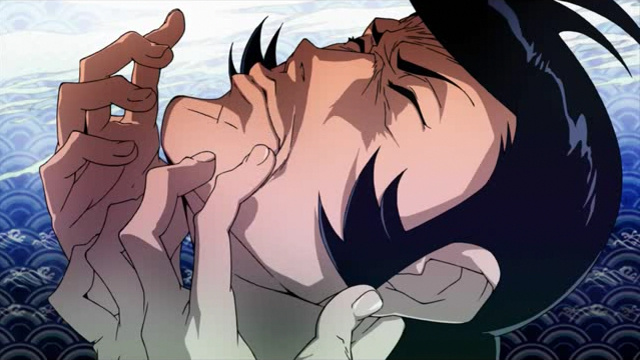
Space Dandy- I’ve said it on numerous occasions before, but if Shinichiro Watanabe is involved with an anime in anyway, I’m going to watch it. Besides sharing the director spotlight, Space Dandy is easily the outlier in his body of more serious-natured work. A parody of classic sci-fi along with a menagerie of all other sorts of goofiness, Dandy may be significantly more comedic, but the Watanabe touch is clear. The animation is gorgeous, the soundtrack catchy, and it takes influence from a number of sources but remains unique.

Admittedly it took some time to get comfortable. The first few episodes don’t make the purpose of plot abundantly clear. Sure enough, the humor really hits it stride and hints of an actual story are dropped.  It’s utter nonsense, but of the good sort. Dandy frequents an outer space Hooters-esque restaurant known as “Boobies.” It’s not high-brow humor by any means, but it doesn’t have to be when you’ve got a pompadour-touting protagonist who kicks it with a space cat and an awkward robot.

In the mere 13 episodes that is the first season, no big twists to the formula are revealed, but it seems a likely route for the second season coming this summer. While not Watanabe’s best work, there are no glaring flaws to speak of and I’ll be tuning in this summer for sure.


Cover.png

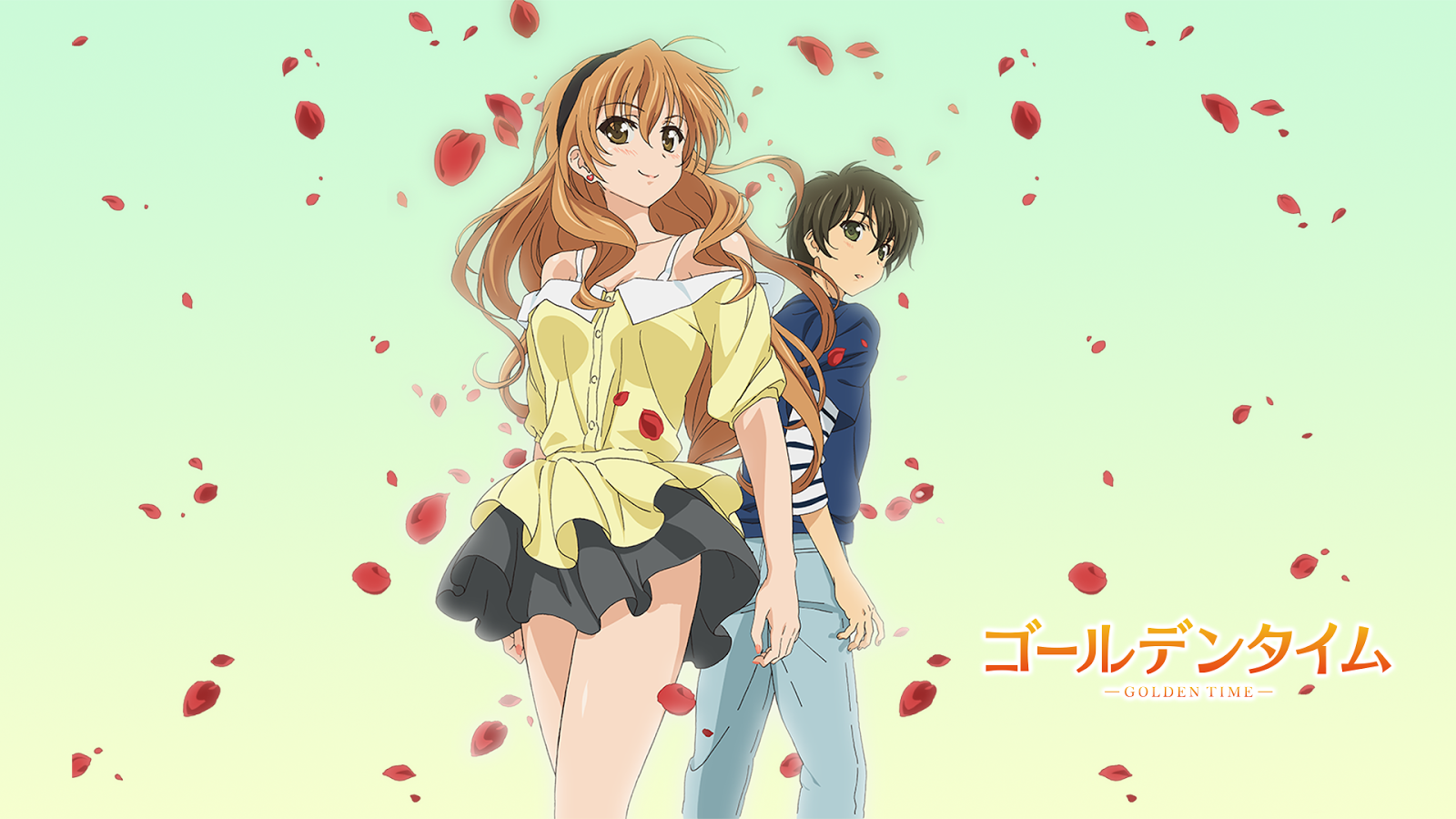
Golden Time- For all intents and purposes, Golden Time should have fallen flat on its unimaginative face. Set at a Tokyo college, a boy is starting to get a new handle on life after an amnesia causing event. There he meets some prototypical anime characters who just barely have an edge of individuality about them. It’s a rom-com which moves away from the high-school setting in appearance, but not in spirit. Yet still I rather enjoy it because Golden Time embraces its nature while managing to avoid too many predictable plots or missteps.

The theme which courses through the veins is self-identity. What truly makes a person? Is it the moments which has led up to their current self, or where they’re attempting to reach? Banri, our protagonist, consistently struggles with this idea as his memories of his past self slowly seep forward, much to the detriment of his current life. As someone currently in college, I perfectly understand the sentiment. I want to move forward, but to do so I have to deal with the effects of my past and continue to grow.

Of course I don’t have an apparition holding me back. Yeah, not the most graceful introduction, but old Banri’s ghost acts more as a visible conscious to no one but the audience. This does however change to some degree later on, but that verges on spoiler territory. It’s forced and the creators should have dropped the idea but were probably encouraged to remain faithful to the light novels. Which is a shame because it’s the one glaring flaw which becomes blindingly stupid at times.

There’s a fair few tropes, such as 2D-Kun and a childhood friend who just so happens to be a cute girl, but for the most part, the singular complexity holds it all together well enough to warrant a viewing.


Saturday, December 14, 2013

I Watch Things Too: Foreign Flicks and the Return of The Walking Dead


The Walking Dead- Here’s a fun comparison of numbers. The season four premiere of The Walking Dead netted roughly 16 million viewers. Breaking Bad’s series finale? 11 million. My reaction to this? Part of me wants to slap some decent taste into the world with all the brute force and arrogance of Kratos. On the other hand, I accept everyone isn’t going to enjoy the same shows as I. Blah, blah, blah; opinions and what not. One thing The Walking Dead has over most is accessibility. The viewer can jump in at any point and within a few episodes have nearly the same grasp of the story as a day one fan.  Then again, mass appeal does not inherently mean high quality. I digress, I really shouldn’t be ranting on about this right now.

Anyway, season four has hit the midway point and I must say, holistically, these past eight episodes were a vast improvement. After Glen Mazzara nearly sucked every drop of quality out like a Dementor, Greg Nicotero has managed to right the ship. Finally, we are seeing how to properly handle the gravity of an apocalyptic setting. It too has become a character. Every moment is tense, and the majority of the cast is far from safe.

Despite the stronger focus on survival, there has been a strong improvement on the character front. It’s still far from perfect, but a couple new additions along with a few old faces have received better treatment, and I dare say this has been the best season yet.

I must admit though episodes 7&8 fail to provide the ending I expected. Just as life is breathed back in, TWD shoots itself in the foot. After some excellent build up topped off with quality storytelling in the 6th episode, conflict and deaths are hackneyed in with reckless abandon. Old plots are rehashed and the cliffhanger is far too similar to a previous season’s. When the big death came rolling into town, it felt much more obligatory than natural.

Even with two fairly weak final episodes, there is a sense of a new beginning. The potential is there and has been realized to some extent. Now it’s time to make it last.


Robin Hood- Occasionally reviewing movies you enjoyed as a child doesn’t always turn out so well. Sometimes you enjoy them just as much. Robin Hood falls somewhere in between. There’s the usual Disney stamp of quality along with some rather enjoyable voice-acting, but the pacing is screwy. Robin Hood feels like an elongated episode of a show. There's not much escalation, and really no climax and proper resolution for that matter.

However, the purpose of some cheery morale compassing is executed well enough, and even as a 21 year-old I still enjoyed it. Whether this is a case of rose-tinted glasses or genuine quality could be debated.


I Saw the Devil- Recently I’ve been watching a whole lot of Korean and Japanese cinema: much of it dark. I Saw the Devil, well frankly the title should give it away. Afterwards I half-jokingly tweeted “If you hate happiness, watch I Saw the Devil.” Truth is, I came away from it far from happy. I didn’t dislike it, it’s just that morbid.

So what makes this bit of Korean filmmaking so disturbing? What’s the premise? Well, it’s rather straight forward, but the execution is deliciously deep. After Soo-hyun’s, a government agent, wife is brutally murdered, he vows track down the man responsible. In the process the viewer witnesses several intimately inhuman scenes. Setting I Saw the Devil apart from torture porn is what backs up the grisly violence. We’re not seeing your run-of-the-mill killer in villain Kyung-chul. In no way is he made a sympathetic character, but his depraved sense of human and uneasy aurora don’t leave a single second lacking in the atmosphere department.

While most moments are well paced there is a 10 minute portion after the discovery of the body that move too quick. Not much time is taken for the introduction of the protagonist, though most the relevant information is revealed along the way.

A word of warning, I advise you to mentally prepare yourself for the murder scenes well in advance. These are not your average gore-fest killing. When I said its brutal, I meant it. Really, really meant it. If you are comfortable with such things, then as a whole, I Saw the Devil is thoroughly enjoyable. The cinematography is excellent, the characters enthralling, and each second uncomfortably tense.


13 Assassins- Looking for a bit of action with a solid story of duty, honor, and justice? Well, look no further than 13 Assassins. While the western may be dead, the very similar samurai genre is quite viable in Japan.

As the Tokugawa Shogunate is in decline during the 1840’s, the stepbrother, of the Shogun is earning himself no love from the people of Japan. His cruel nature has lead to the killing and mutilation of several prominent members of the hierarchy and their servants. Finally, portions of the political inner-circle decides to call upon a renowned samurai to carry out an assassination, before the situation gets any worse. Said samurai gathers a team of trusted and highly skilled warriors to accompany him and blood, guts, and drama ensue.

While the beginning can be difficult to follow thanks to numerous nighttime scenes, it’s rather easy to pick things up through the context clues. Really, all you need to know is that there is one ruthless bastard guarded by 75+ soldiers and 13 assassins are tasked with taking him out.

While a few of the characters are throw-away at best, the majority of the cast is interesting enough to carry the action. Of course, the top-notch samurai ass-kicking is good is compelling enough on its own. The final showdown between the assassin’s and the shogunate stands alongside memorable moments such as the ones found at the end of The Matrix and Saving Private Ryan. There’s not a whole lot of action prior, but the pacing causes those final minutes before the shit hits the fan to be filled with sweat, sweat tension, eventually exploding into all out violence.


The Wind that Shakes the Barley- Historically based foreign cinema is often refreshing. American films tell us some great tales, but we rarely dabble in the more obscure. Not that this anyone’s fault, you write what you know after all.

TWtStB is the tale of two brothers during the Irish War of Independence and ensuing Irish Civil War which took place from 1919-1923. The first issue I have are the accents. For someone unaccustomed to hearing such unadulterated Irish speech, it was difficult to keep up with the dialogue.  Not so surprisingly the two I found the easiest to understand are Cillian Murphy (Batman Begins and Inception) and Liam Cunningham (Game of Thrones).

Despite my woes, TWtStB is a solid piece of entertainment. While periodically dragging, the more emotional high points were executed quite well. The IRA’s struggle to gain independence from Britain was tangible and sympathetic. Especially for someone found of American history.

Monday, November 18, 2013

The Most Pointless Debate

 How do you define the term video game? It’s a seemingly innocuous question, yet it spurs so many pernicious "debates" amongst our community. Ones which only serve to fracture and alienate us from one another.
Think back to the end of 2012 and early 2013. When it came time for every outlet under the sun to hand out their awards, two games in particular stood out. The Walking Dead and Journey. They even dominated events such as the Spike VGAs and the Game Developer Conference Awards. Now, not everyone agrees with these award choices, and that’s entirely okay. The problem is that many argued against the praise on the grounds that they felt neither one was truly a video game.
Truly a video game? 
Now, the discussion of what qualifies as "gameplay" has been had numerous times, even on this site. We even discussed it on our To the Moon spoilercast. I try to remain open-minded when it comes to defining games. Simplistic mechanics, a lack of a fail-state, and nontraditional gameplay are a few of the common staples in "Not Games." But none of those bother me, and I’ll gladly argue — to death — that they probably shouldn’t perturb anybody else.
Yet there are some who are of the opposite mind. "The Walking Dead isn’t a game, it’s just a visual novel. Heavy Rain should've been a movie. You don’t do anything in Journey besides walk around." These are the types of arguments on the other side of the debate.
A rose by any other name, my dear friends. Words are a creation of mankind. Hopefully we can all accept that. And like us, our words have evolved over the course of their existence. "Gay" is but oneenormously relevant example of this. So why can’t the definition of video game morph in the same manner?
Who are you to tell a developer that what they created was not a game? If that’s what they said they did, then that’s what they did. Sure, we have to keep things within reason. Writing a mathematics textbook and then claiming it to be a game is potentially going too far, unless its visuals are computer generated and if it posses structured interactive play. I guess then it's just the first video game that wears the trappings of mathematical instruction.
ARE THOSE NOT COMPUTER GENERATED IMAGES? ARE YOU NOT INTERACTING WITH THEM?
 The thing is, I don’t intend to argue this point to death. I know I’m not nearly convincing enough to sway the other side. I’m here to point out a fact. A cold, hard fact. The solution is staring us straight in the face. Maybe even shouting at us. If we would simply accept it, no one would be harmed in the aftermath.
If those shouting to the high heavens that titles like the The Walking Dead are Not Games would simply accept that they are Actual Video Games, the results would be almost singularly positive.
What’s the harm in conceding? The only wounds to be suffered are superficial. Let's all swallow our pride and end this debate, moving on to far more important matters like the sub-par representation of non-white males in games, or the threats developers receive when they disappoint their fans. I know this likely comes off as incredibly arrogant, but I really do find it difficult to convince any negative repercussions of a widened definition. Admit the category is ever-changing and that’ll be that. I assure you there is no Kool-aid, no secret cult.
No good comes from denying a game’s gamely existence, but plenty of good will come of accepting the fringe cases, embracing them, and moving on with our lives.